
Recognition starts with the business behind the mark
Logo design for a West Point business should make repeated encounters easier to connect. Someone who sees your vehicle, visits your website, and receives a proposal should recognize the same company. Galactic Digital Studios develops identity direction around the business name, audience, and practical applications so the logo can support that continuity beyond a single attractive presentation.
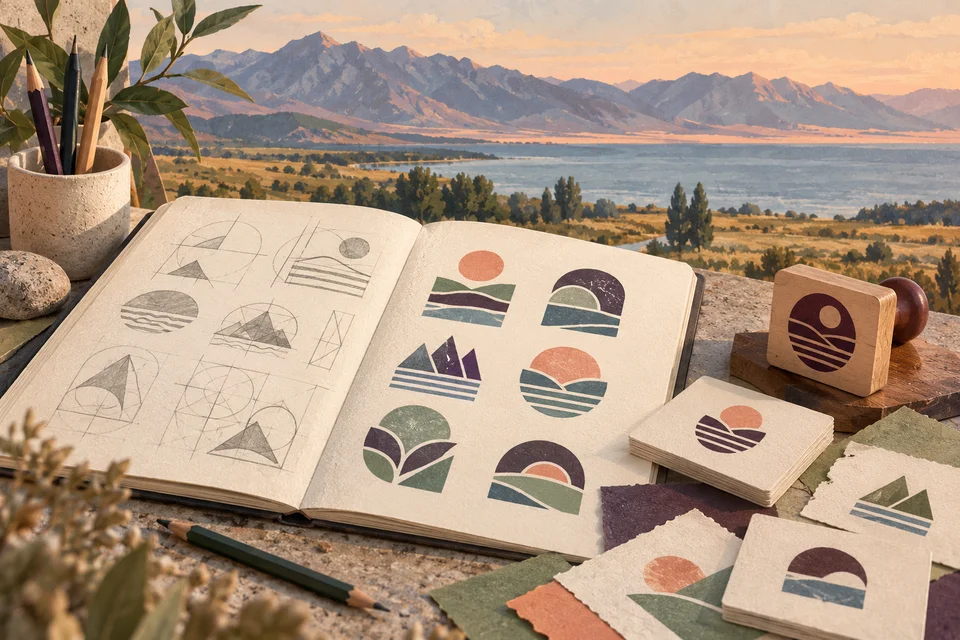
West Point’s official economic-development page identifies its agricultural heritage and Great Salt Lake setting. Those qualities may inspire a visual direction when they fit the business, but they are not a mandatory design brief. A company serving a broad regional audience may need a different approach from one with a strong connection to a specific local product or practice.
A field line, lake shape, or mountain reference can easily become generic if it says little about the offer. Discuss what customers should remember: a name, a distinctive initial, a precise symbol, or a particular tone. Local context helps ask better questions; it does not require copying civic imagery or making an identity look like an official West Point program.

Decide whether you need a new identity or a careful refinement
Start by examining the problems with the existing logo. Does it become unreadable at small sizes? Are there too many competing versions? Is the business name hard to identify? Has the audience or offer changed? Those issues provide a stronger basis for a project than a general feeling that the mark is old. A familiar identity may contain useful recognition worth preserving.
A refinement can simplify forms, improve spacing, or organize variants while retaining a recognizable idea. A new direction may be appropriate when the current identity no longer fits the business or cannot function in important settings. Review the tradeoff before committing: a major change may require new website assets, printed stock, signs, profiles, and internal documents.
List the first places the logo must appear. A website header, social avatar, embroidered garment, and vehicle application impose different constraints. You may not need every application immediately, but knowing the likely uses helps evaluate concepts. The strongest direction is one that fits the business and survives practical use, not simply the one that looks most dramatic on a large mockup.

Evaluate concepts with clear criteria
The creative brief should describe the audience, business personality, name, services, and desired associations. Bring examples of what feels appropriate, but explain the reason behind each preference. A request for a clean identity could mean understated, readable, technical, or approachable. Clarifying that language gives the design direction a useful foundation and makes later feedback more specific.
Concept review should consider the relationship between the name, typography, symbol, spacing, and color. Does the name remain clear? Does the mark fit the intended tone? Is the silhouette distinguishable at a small size? Could the design be mistaken for a nearby competitor or a public organization? Evaluate the same criteria across directions rather than selecting isolated details from unrelated concepts.
Color is useful but should not carry the entire identity. A single-color version helps reveal whether the underlying forms work. A reversed version may be needed for a dark background. A compact variation may serve a small avatar, while a horizontal arrangement may suit the website. The exact set should follow real applications and the agreed scope, not a generic package of unnecessary files.

Refine the chosen direction before expanding it
Discovery collects the business context, existing materials, and required uses. Direction work explores suitable visual approaches. Once a concept is selected, refinement addresses proportion, letter spacing, alignment, and the relationship between elements. These small decisions can affect legibility and consistency, particularly when the mark is reproduced at different sizes or by different vendors.
Review concepts with the people responsible for the business, and gather feedback through one decision maker. Tie comments to the brief: the type is too delicate for the intended use, the symbol suggests the wrong service, or the name loses prominence. A clear reason helps solve the actual issue without an endless sequence of arbitrary changes.
Test the direction in realistic settings before approving final files. A garment vendor may need simplified artwork; a small digital display may need a compact arrangement. Mockups can help explain context, but they are visualizations rather than evidence that a sign or product has been produced. Confirm vendor requirements before treating an attractive presentation as a production-ready application.

Make the handoff useful and the limits explicit
Delivery should provide the agreed versions and formats with enough guidance to choose the right one. Vector artwork is useful for scaling and vendor production, while appropriately sized raster exports serve many everyday digital tasks. Ask which editable source files are included, how files are organized, and what the permitted uses of any typefaces or other licensed components are.
Basic usage guidance can explain spacing, minimum practical sizes, color values, background choices, and alterations to avoid. Your team should know which version belongs on a dark surface and which one fits a narrow header. A usable handoff reduces the chance that staff stretch the mark, substitute colors, or rebuild it from a low-resolution image.
Budget and timing depend on research, concept development, revisions, required variants, and supporting identity materials. Changing the business name midway through the project can affect much of the work, so establish it early. Discuss approval stages and delivery requirements before work starts. Formal trademark clearance and registration are separate from creative exploration and should be addressed with an appropriate professional when needed.
Galactic’s existing logo portfolio offers concrete work to discuss. Examine how the name and symbol relate and whether the identity appears consistent across uses. The examples on this page are not claimed as West Point clients. A logo can support recognition and credibility, but customer experience, service quality, and repeated use build the broader reputation over time.

Questions about logo design in West Point
Does a West Point logo need mountains or farmland?
No. Local references are useful only when they reinforce the business and audience. A distinctive typographic or abstract approach may be more appropriate and can work across a broader service area.
Can you preserve parts of our existing identity?
That can be discussed during discovery. Identify which elements customers recognize and which cause practical problems. A refinement may retain useful familiarity while improving legibility or organizing inconsistent versions.
Will the logo work on clothing and signs?
Include those uses in the brief and obtain vendor specifications. Production methods can require simplified forms or particular file types. Review the intended applications before approving the final identity.
What files should we request?
Agree on scalable artwork, practical digital exports, color variants, and any editable source files or usage guidance you need. File delivery and licensing should be stated clearly in the scope.
Does logo design include trademark registration?
Do not assume it does. Creative research and visual differentiation are different from formal legal clearance or registration. Confirm the scope and obtain qualified advice for those separate decisions.
Connect the work across your business
West Point web and design services · West Point web development · West Point graphic design
Compare relevant service-area information for Clinton and Syracuse, or explore Galactic’s portfolio before discussing your scope.
Your next step
Make the next customer decision easier.
Bring your business name, current identity if you have one, and the first places the logo needs to work. We can discuss a clear, usable identity direction for your West Point business.
Discuss your West Point project