
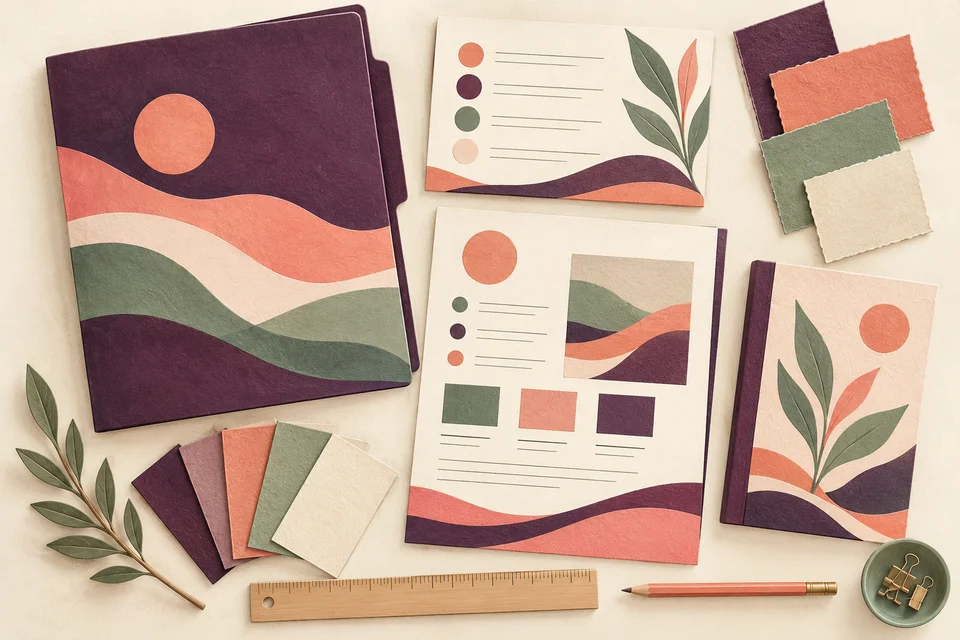
Design the information customers need after saying yes
Customer communication continues after the first inquiry. People may need to prepare for an appointment, review a project summary, or understand what happens after delivery. When those materials are difficult to scan, even accurate information can be overlooked. Graphic design can make the important details easier to find and use.
Eastmont is a Washington census-designated community, a useful distinction when writing local business materials. A sheet describing service coverage should not imply that every reader can visit an Eastmont office. The wording, map, and next step should describe the actual arrangement the business supports.
Galactic Digital Studios helps Eastmont businesses organize printed and digital customer materials around practical tasks. We consider the reader, the point in the relationship, and the information that must remain clear when a document is viewed quickly or shared with someone else.
Choose a format by the job it needs to do
A welcome folder can bring several resources together, but not every customer needs a packet. A short preparation card may be enough for a simple appointment. A more involved project may need a summary sheet with decisions, responsibilities, and the next review point clearly separated.
Identify who receives each item and when they use it. A document reviewed during a conversation can be more detailed than a reminder read on a phone. The format should reflect that situation instead of treating every piece as another promotional surface.
For a hypothetical service business, separate an introductory overview from instructions for confirmed customers. That separation helps prevent tentative information from looking like a commitment. It is a communication example, not a description of a completed Eastmont project.

Put actions, conditions, and reference details in order
Begin with the action the reader needs to take. State the purpose of the document, then organize the supporting detail around that purpose. Headings should identify useful information rather than simply divide the page into visually balanced blocks.
Instructions benefit from a clear sequence when order matters. Reference information may work better as grouped sections. Choose the structure based on how someone will use the material, and avoid forcing a step-by-step layout onto content that people consult in different orders.
Keep important qualifications close to the statements they explain. A prominent promise followed by a distant limitation can create confusion. Design should make the actual terms readable, including any approved coverage conditions or dependencies that affect the customer’s next step.

Use a visual system that survives real content
Design with representative copy early. Long service names, varying project descriptions, and ordinary customer questions can expose weaknesses in a layout that looks polished with short placeholder text. Leave enough flexibility for the kinds of updates the business expects.
Typography, spacing, contrast, and consistent labels can do more for clarity than adding decorative elements. Color can distinguish categories, but the distinction should also be understandable without relying on color alone. A printed copy may not reproduce every subtle tonal difference.
Consider the digital version as its own deliverable. If customers read a PDF on a phone or use assistive technology, the file’s structure and text handling matter. Agree on accessibility requirements and review methods at the start rather than assuming a print export automatically meets every need.

Create customer materials that make your Eastmont business easier to work with.
Test the material with a realistic customer task
Begin by collecting existing documents, approved wording, brand assets, and production requirements. Identify which facts the business must verify and who can approve them. Design feedback is more productive when factual corrections and visual preferences are clearly distinguished.
Develop a representative layout and ask a reviewer to find a specific instruction or explain the next step. This can reveal an unclear heading or an important detail buried too low on the page. Refine the information hierarchy before extending it across the full set.
For printed materials, confirm dimensions, folds, margins, bleed, and supplier requirements. Review the final proof at actual size where possible. Small text that looks comfortable on a large monitor may become difficult to read on the finished card.

Prevent yesterday’s document from becoming today’s mistake
A useful handoff includes a file inventory and a clear distinction between editable sources and approved publishing files. Decide how versions will be named and where current materials will live. Staff should not have to guess which attachment contains the latest instructions.
Templates can help with recurring updates when the team has the right tools and a clear editing boundary. Specify which text and images can change safely, and test realistic variations. A template that breaks whenever a paragraph grows is not a practical maintenance solution.
Budget depends on the number of distinct layouts, writing and editing needs, adaptations, revision rounds, and production support. A family of related documents may share design decisions, but each still needs content review. Clarify those responsibilities in the estimate.
Assess usefulness alongside consistency
Good customer materials should work without a designer present to explain them. Look at whether the reader can identify the purpose, locate the relevant detail, and act on it. Visual consistency supports recognition, while the information structure carries the practical value.
The conceptual paper materials shown here illustrate possible approaches. Portfolio images represent broader studio work and are not claims of Eastmont commissions. Discuss the reasoning behind relevant examples and how the same attention to readability could serve your own documents.
Graphic Design questions for Eastmont businesses
Can you redesign existing customer documents?
Yes, existing materials can provide the starting point. Identify what is inaccurate, difficult to read, or hard to maintain. The project may involve restructuring content as well as changing its appearance, so agree on writing responsibilities.
Should one document serve both prospects and customers?
Sometimes, but different stages often need different information. A prospect may need a service overview, while a confirmed customer needs preparation instructions. Separate pieces can reduce confusion when their purposes differ substantially.
Do we need print and digital files?
Choose outputs based on actual distribution. A printed piece and a phone-readable document may require different layouts or preparation. Specify formats, accessibility needs, and supplier requirements before production begins.
Can our staff make routine updates?
Editable templates can be included when the software and editing tasks are defined. Guidance should identify the parts staff can change and how to export the finished files. More substantial redesigns may remain separate work.
What affects the production schedule?
Content readiness, approval availability, the number of layouts, revisions, and print requirements all matter. Confirm any supplier deadlines early. A release date should be planned against those dependencies rather than assumed from the size of a document.
Explore related services and nearby areas
Eastmont web and design services · Eastmont web development · Eastmont logo design · Everett services · Picnic Point services · Galactic portfolio
Plan your next step
Give the next step a clear place on the page
Bring the documents customers receive and the questions they still ask. We can organize the information into a practical set of materials with clear hierarchy, suitable formats, and a manageable update process.
Discuss your Eastmont project