
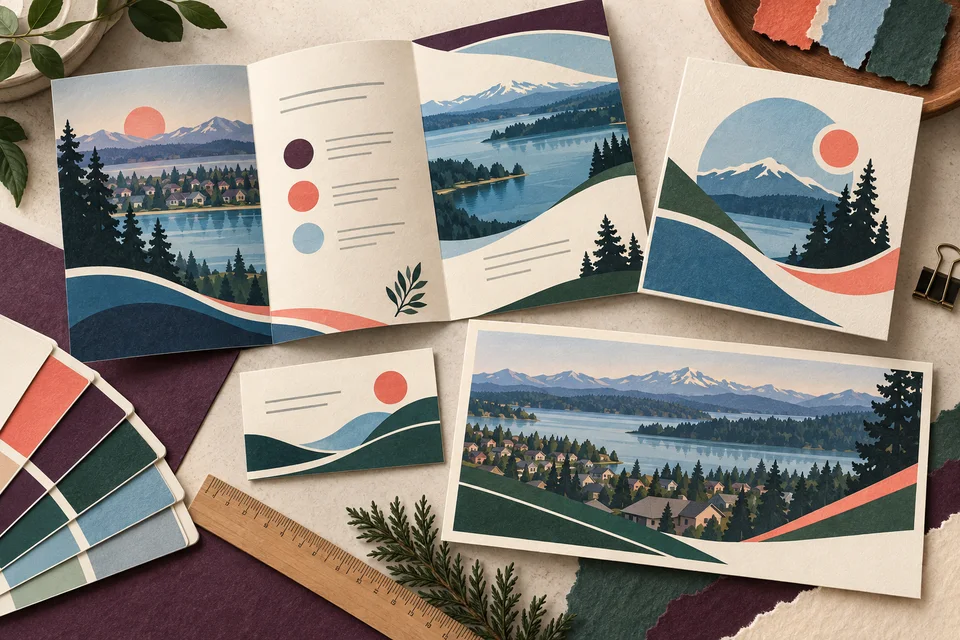
Design for the way the information will be encountered
A Bonney Lake business can need both a quick introduction and a detailed explanation. A person collecting a service card has different needs from someone reviewing a proposal at home. Graphic design should respect those situations by choosing the right amount of information and a layout that helps the reader use it.
The city’s Centers Plan identifies the SR 410 commercial corridor, while its parks information describes Allan Yorke Park on Lake Tapps. These references suggest different visual and geographic contexts, not a single audience for every business. A promotion for a professional service may need a very different tone from a visitor-oriented introduction.
Galactic develops graphic design around the actual purpose of the material. We consider what the reader should understand, which details support the decision, and where the next step belongs. Local imagery can help establish context, but the business message must remain readable and specific.
Separate the introduction from the instructions
A promotional piece should explain why the offer matters. A preparation guide should explain what someone needs to do. Combining both without a clear hierarchy can leave the reader unsure whether the material is an advertisement, a checklist, or a confirmation. Decide which job comes first and organize the rest around it.
For a hypothetical appointment-based Bonney Lake business, an introduction card might describe the service and point to an inquiry page. A separate guide could explain what to bring after an appointment is confirmed. That sequence gives people the right detail at the right time and keeps the first piece from becoming crowded.
When several options appear together, use consistent labels and comparable descriptions. Readers should be able to understand how the options differ without decoding a separate writing style for each one. Clear content often improves the layout before any visual embellishment is added.

Build reusable material without freezing changing facts
Identify what will remain stable and what is likely to change. A general service description may have a long useful life, while availability, offer dates, or event details may need frequent updates. Plan durable print pieces around the stable message and direct readers to maintained information for changing details.
Lake Tapps imagery can suit some Bonney Lake materials, but it should not imply that a business operates on the waterfront or has access to public facilities. Use original business photographs when location or completed work matters. The conceptual illustrations on this page are visual explanations, not evidence of a particular property or project.
List every required format, including its dimensions, distribution channel, and intended shelf life. A folded guide, a square promotion, and a slide presentation may share information but require different compositions. Gather approved text, usable logos, image permissions, and vendor specifications before settling the layouts.
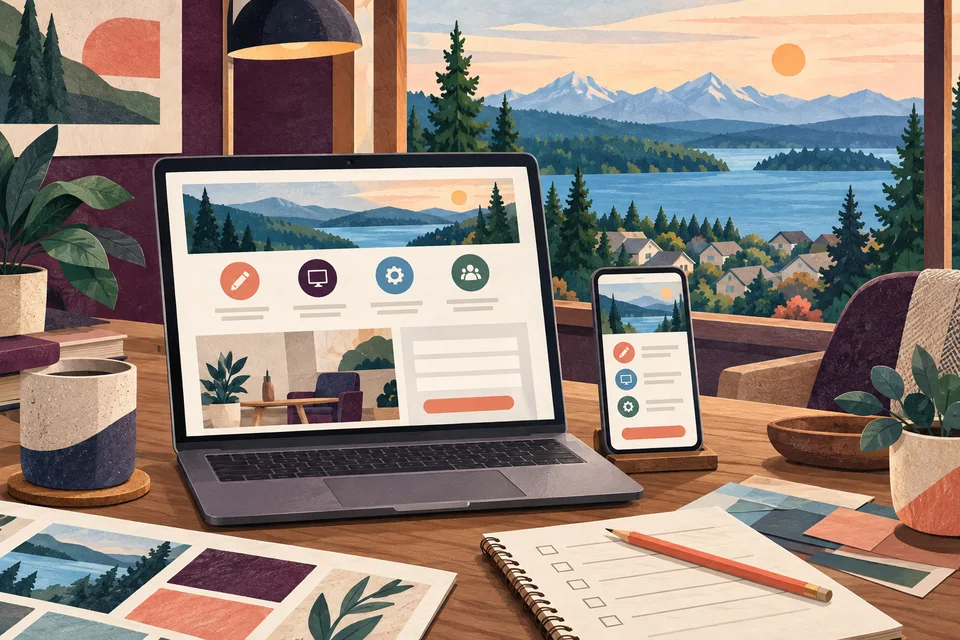
Make the important detail easy to find twice
The first read should reveal the main idea. A later read should make supporting details easy to locate. Galactic uses headings, spacing, contrast, and consistent visual cues to support both tasks. A piece can feel inviting without making every sentence equally prominent or forcing the reader through a dense block of text.
For a service guide, the important sequence might be eligibility, options, preparation, and next step. For a presentation, it may be the problem, proposed approach, and decision required. The design should make that sequence visible. Decorative choices come after the information has a useful order.
Across formats, retain the business’s established language and identity while adapting the layout. A phone graphic may need a shorter message than a printed guide. That is a deliberate editorial decision, not simply a smaller export of the same crowded page.
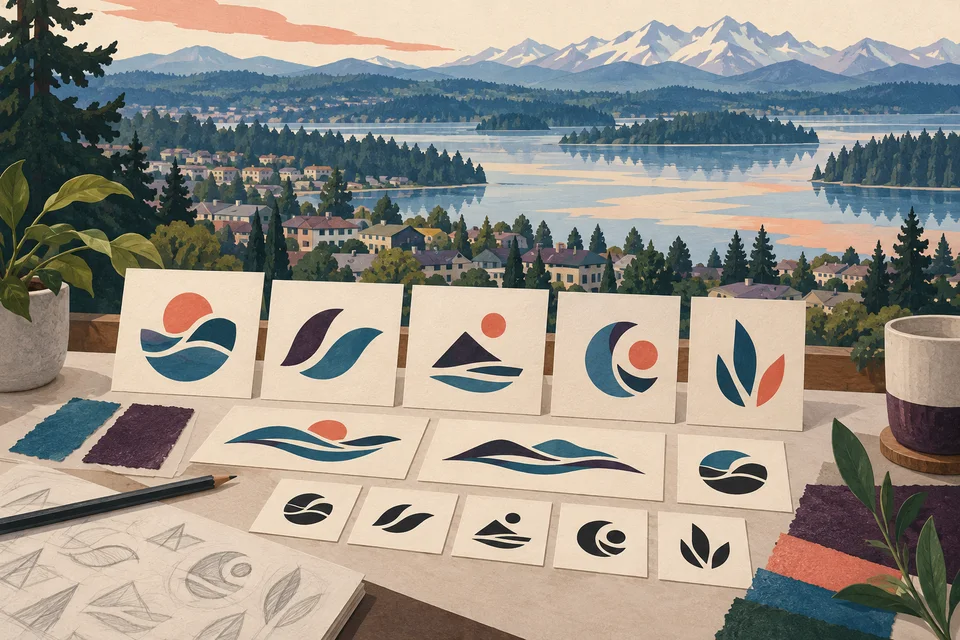
Name the final formats and the update responsibilities
A proposal should distinguish original layouts, adaptations, exports, and editable templates. Those tasks require different amounts of effort. Explain whether the team needs a ready-to-publish file, a print-ready document, or a template that a staff member can revise regularly. Include software and licensing needs in that discussion.
Budget depends on writing, imagery, format count, revision needs, and production complexity. Timing also depends on vendor requirements and final approval of the facts. If the material must be physically available on a certain date, allow for proofing, production, and delivery after design approval.
Clarify who orders print, communicates with the vendor, and checks the final output. Design does not automatically include physical production. The handoff should also identify which assets can be reused and where the current approved files will be stored.
Proof the material in its actual size and setting
Start by confirming purpose and audience, then organize the information and establish a visual direction. Early reviews should catch missing or confusing content. Later reviews can focus on spacing, image quality, and consistency. One person should consolidate feedback so contradictory requests can be resolved before another version is produced.
Print work needs review against the vendor’s specifications, including trim, bleed, folds, and color requirements where applicable. Digital graphics need checks in the intended crop and at phone size. A large desktop proof can make tiny type appear more usable than it will be in practice.
Verify every business detail in the final layout. Test any link or QR destination and explain the reason to follow it. Keep approved files separate from drafts. When an offer changes, identify which online versions and remaining printed pieces need attention so outdated information does not continue circulating.

Use examples to discuss readable communication
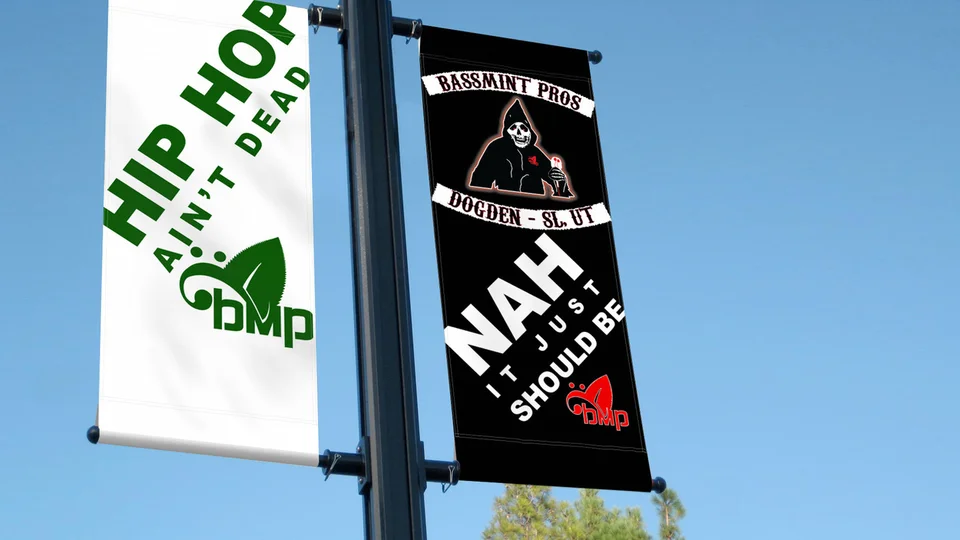
Galactic’s graphic portfolio shows existing work for evaluating hierarchy, imagery, and format. The examples displayed here are from other projects, not Bonney Lake commissions. Ask what the viewer notices first, what supports the message, and whether the next action is understandable without an explanation from the designer.
Better materials can support recognition and make an offer easier to compare. Response still depends on relevance, distribution, pricing, and follow-up. Before producing a large set of variations, make sure the underlying message and destination are accurate and useful for the intended audience.
Bonney Lake web development can supply the maintained information source behind print materials. Logo design can improve an identity that is difficult to apply consistently. Related Puyallup and Auburn pages are available when you need a coordinated regional project.
Questions about graphic design in Bonney Lake
Can we use the same content in several formats?
Yes, but the amount and arrangement should suit each format. Decide what the reader needs at that point rather than forcing every detail into every version.
Should instructions be part of a promotion?
Include only what supports the immediate decision. Detailed preparation instructions may work better in a separate guide supplied after the customer has taken the next step.
Can our staff edit the material later?
Discuss templates, software, fonts, and practical limits at the start. A useful editable file also needs guidance for keeping later versions readable and consistent.
Who checks printing requirements?
Assign that responsibility in the scope. The designer, owner, and vendor need a shared understanding of dimensions and production requirements before final approval.
What if our information changes frequently?
Separate stable descriptions from changing terms. Use a maintained online destination for current details and create a clear review process for dated materials.
Related services and nearby areas
Bonney Lake web & design services · Bonney Lake web development · Bonney Lake logo design · Puyallup services · Auburn services · Galactic portfolio
Plan your next step
Put clearer communication to work.
Make the next guide or promotion easier to read and easier to maintain. Bring the message, format, and customer question it needs to answer.
Discuss your Bonney Lake project