

A shared piece should make sense beyond the original conversation
Kitsap County has described Burley as a South Kitsap neighborhood, while the Census Bureau lists it as a Census designated place. A local reference can make an introduction familiar to one reader and unfamiliar to another. Graphic design should give both readers enough context to understand the business offer.
A service sheet may be passed to someone who never spoke with the owner. A presentation may be reviewed after a meeting. A digital graphic may appear without the surrounding explanation. Each piece should retain its purpose and next step when it travels beyond the original setting.
Galactic plans Burley business graphics around that practical requirement. We consider the audience, format, and life of the information before choosing the layout. A strong visual impression is useful when the reader can also identify what the piece is about and what they can do next.
Choose one primary job for each material
An introduction should establish the offer and relevance. A service sheet should explain useful details. A presentation should support a decision or discussion. When every piece tries to do all of these jobs at once, the message can become crowded and the important information harder to find.
For a hypothetical small Burley organization, an announcement might direct readers to a maintained page for full details. For a service business, a compact introduction could lead to a more detailed explanation online. These examples describe possible applications, not actual clients, events, or local partnerships.
Write the main message and desired action before selecting a format. Then decide which supporting details are necessary at that stage. Removing information from a small piece does not mean discarding it; it may belong in a more suitable destination where the interested reader has room to explore it.

Separate lasting identity from information that expires
Service names, approved identity elements, and a concise business description may remain useful across many pieces. Dates, availability, and specific offers can change quickly. Organize the content so the owner can update the changing details without recreating the whole design or accidentally altering established information.
Burley Lagoon can provide a regional visual reference, but imagery should not suggest access, ownership, or affiliation that the business does not have. Use approved photographs of your actual work when evidence matters. Conceptual illustrations can support a message, provided they are not presented as documentary locations or completed customer projects.
List every output and its intended use. A folded brochure, a square digital graphic, and a presentation may share content but need different compositions. Gather final wording, original logos, image rights, and production specifications. Identify who approves the facts and which team member will edit future versions.
Make hierarchy work without a narrator
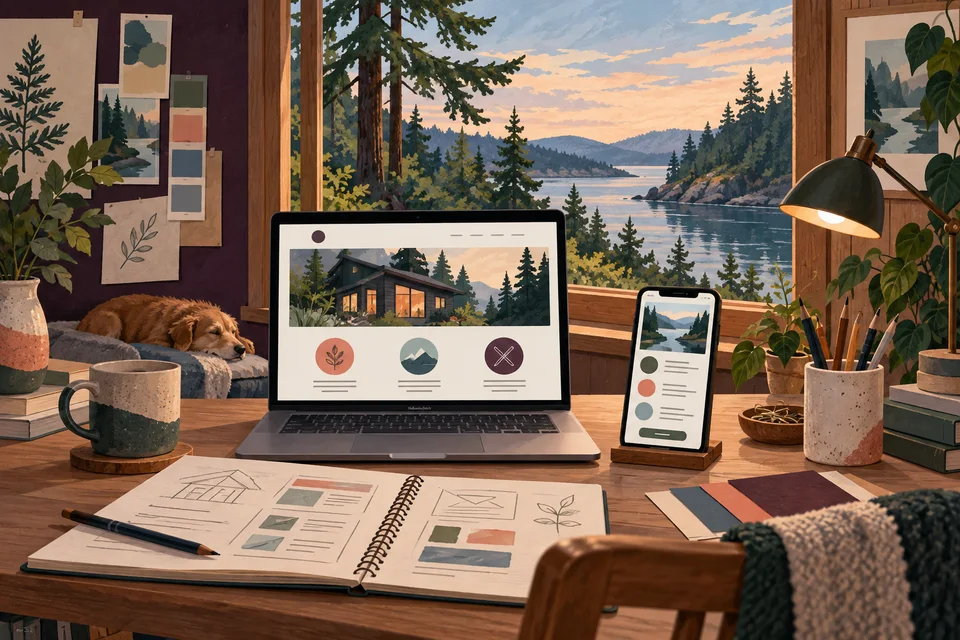
Galactic uses typography, spacing, contrast, and imagery to establish a reading order. The central idea should be evident first, followed by the information needed to evaluate it. A clear next step completes the piece. The reader should not depend on a verbal explanation to understand the relationship between these elements.
A Burley business might use restrained inlet colors or woodland textures when they suit its character. Those choices should remain distinct from community-group or public identities. Consistency comes from a considered visual system and accurate language, not from repeating a scenic image in every available space.
Adapt the message deliberately for each channel. A phone graphic may need fewer words than a printed guide. A presentation may need a supporting handout rather than dense slides. The formats can feel related while giving each audience the amount of detail appropriate to the moment.

Describe deliverables by format and intended editor
A scope should distinguish original layouts, adaptations, print-ready files, digital exports, and editable templates. These are different tasks. A template for regular staff use needs a practical editing workflow, not simply a source file that only a specialist can operate.
Budget depends on writing, imagery, format count, revisions, and production complexity. Timing also depends on approved content and vendor schedules. If a physical piece is required by a particular date, allow for proofing, printing, and delivery after design approval rather than treating approval as the final milestone.
Clarify who communicates with the printer and checks the proof. Discuss font and image licenses, source-file rights, and software requirements. A usable handoff should explain how the business can reproduce and update the work without relying on unstated assumptions.
Review the piece where readers will actually encounter it
Discovery establishes purpose and audience. Content organization identifies priorities before the visual direction is refined. Early feedback should catch missing information and unclear relationships. Later feedback can address spacing, image quality, and consistency without repeatedly changing the fundamental assignment.
Read print work at its intended size and confirm the vendor’s specifications. Inspect digital graphics in their actual crop and on a phone. Test links and any QR destination. Important details should remain accessible when the piece is viewed outside the large design preview used during approval.
Approve every business fact in the final layout, then store the current version separately from drafts. For reusable templates, test realistic variations in text length and imagery. Guidance about those limits helps future edits preserve the clarity of the original design.

Use portfolio examples to assess communication choices
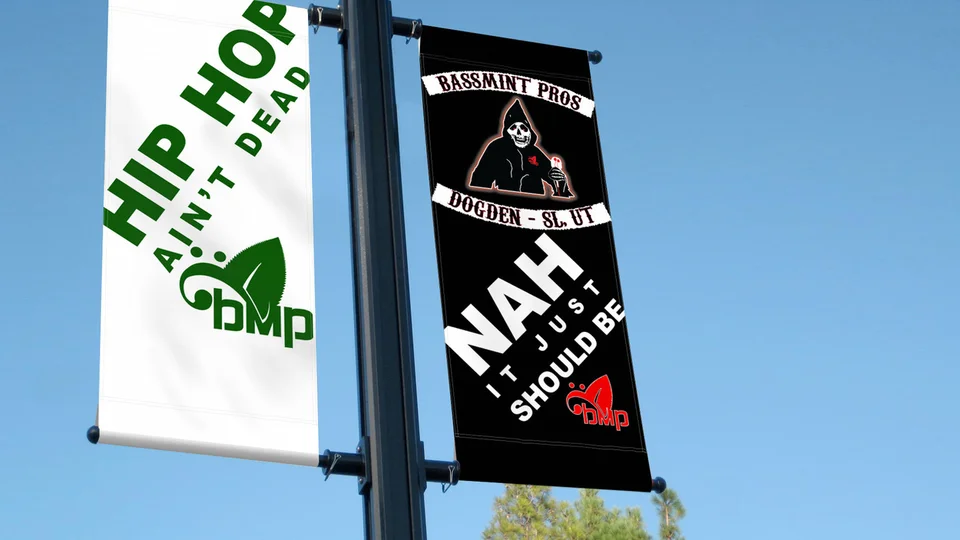
Galactic’s graphic portfolio provides completed work for discussing hierarchy and visual tone. The images here are not Burley commissions. Ask what the viewer understands immediately, which details remain easy to locate, and whether the piece works without the designer explaining its intent.
Clear graphics can support recognition and help people evaluate an offer. Results also depend on distribution, audience relevance, pricing, and follow-up. Before producing more variations, make sure the core message and destination are accurate. A well-designed piece cannot compensate for an offer that changes without corresponding updates.
Burley web development can provide the maintained information source behind shared materials. Logo design can improve the identifying elements used across formats. Port Orchard and Gig Harbor pages offer related service information when the project extends into a broader regional presentation.
Questions about graphic design in Burley
Can one idea work in print and digital formats?
Yes, but the wording and arrangement should fit each use. Plan the adaptations rather than shrinking a dense print layout into a small screen graphic.
Can staff update recurring materials?
Discuss templates and software before design begins. Include guidance for text length, images, and exports so later versions remain clear.
Do we need local imagery?
Only when it supports the message. Actual work examples or a strong typographic layout may be more relevant than a landscape image.
Who handles printing?
Specify that responsibility in the proposal. Design, vendor coordination, production, and delivery should be discussed as separate tasks.
How do we keep a shared introduction current?
Use stable facts in durable materials and link to a maintained source for changing detail. Review active files and printed stock when the offer changes.
Related services and nearby areas
Burley web & design services · Burley web development · Burley logo design · Port Orchard services · Gig Harbor services · Galactic portfolio
Plan your next step
Put clearer communication to work.
Give your next printed or digital introduction a clear purpose. Share who will receive it, how it will be used, and the information it must carry.
Discuss your Burley project