
Make the message travel well beyond its first setting
Graphic design for a St. Louis business should help a message remain clear when it moves from a conversation to a printed piece, an email, or a presentation. Galactic Digital Studios shapes visual communication around the information readers need and the action the business wants them to take. The format should serve that purpose.
St. Louis's official neighborhood directory shows that the city contains many distinct communities. A neighborhood reference can be meaningful to one audience and unfamiliar to another. When materials circulate beyond the immediate area, include enough context for a new reader to understand the business without relying on shared local knowledge.
For a hypothetical neighborhood retailer, that might mean a launch announcement with a clear offer and visit details. For a hypothetical professional service, it might mean a capabilities brochure that works when forwarded to a colleague. These are examples of communication needs, not claims about local clients or demand.
Plan the message before multiplying the formats
A campaign can become difficult to manage when every piece is written separately. Start with the core offer, the audience, and the next step. Then decide which facts need to remain consistent across a poster, digital graphic, brochure, or presentation. Shared content decisions give the design a stable foundation.
Separate the main message from supporting detail. A poster needs to establish the point quickly, while a brochure can explain scope and qualifications. A presentation may need a sequence that supports a conversation. The same visual identity can connect these formats without forcing them to carry identical amounts of information.
List the channels the business will actually use. Creating many unused sizes does not make a project more effective. Prioritize the material with a clear distribution plan, then define adaptations that serve a real audience. This keeps production and later updates more manageable for a small team.

Keep the offer, date, and next step in agreement
Recurring announcements need a reliable hierarchy. Readers should be able to identify what is being offered, which details are current, and how to proceed. If a piece has a limited lifespan, make that visible. A striking layout should not make an essential qualification difficult to find.
For St. Louis materials that include location information, distinguish the business's actual premises from broader service coverage. City and county references should be accurate, especially when a piece is forwarded or shared without its original caption. The design should leave room for the information that makes the next action possible.
A useful production system also identifies where approved copy lives. When a date or service description changes, staff need to know which versions require revision. Design can provide consistent placements and reusable structures, but a designated content owner is still needed to verify the facts before publication.

Build a visual language around the business’s voice
We consider audience, message, distribution, and existing identity together. Typography and spacing establish the reading order; color and imagery can add character. These choices should make the business recognizable without competing with the practical information a customer needs to understand the offer.
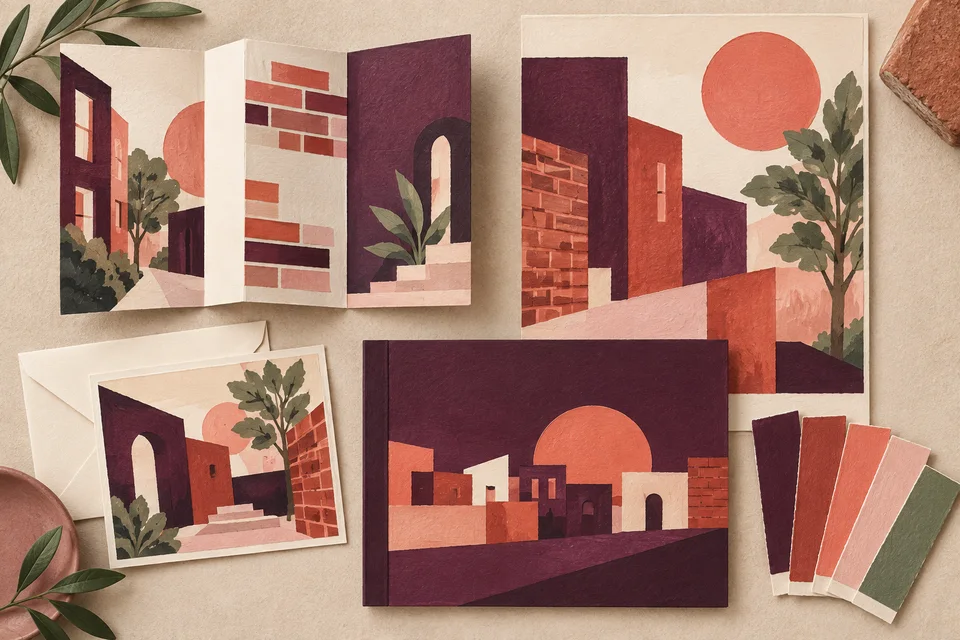
Local atmosphere can be expressed through a restrained detail rather than a collection of landmarks. The conceptual brick-inspired rhythms on this page demonstrate one possible visual starting point, not a required St. Louis style. A final direction should follow your business's own character and the purpose of the material.
Use realistic content during design. Long service names, necessary qualifications, and different image shapes reveal whether a layout is resilient. If the piece will become a template, test the kinds of changes staff expect to make. A design that works only with a perfectly short headline may not be useful in everyday production.

Let’s plan graphic design around your St. Louis customers’ next decision.
Review each adaptation in the setting where it will appear
Discovery can establish the deliverables, source materials, and approval responsibilities. We can then develop a primary direction and adapt it to the agreed formats. Feedback on the main message should happen before a large number of versions are produced, reducing the chance that one late change affects the entire set.
Review content and appearance together. Check that the reading sequence is obvious, the offer is accurate, and the next step works. Ask someone outside the project to explain what the piece is for. Their response can reveal whether a familiar internal phrase needs a clearer explanation.
Before delivery, inspect print files against supplier specifications and digital outputs at realistic sizes. Check links where included and confirm image quality and contrast. Printing, distribution, and production approvals should have named owners. A successful handoff gives the business files that are ready for the uses actually included in the project.

Account for versions, editing, and production needs
Budget depends on the number of original layouts, adaptations, content development, and image preparation. Changing a poster into a small digital card may require a new hierarchy, not simply a smaller export. A proposal should distinguish the primary design from the work needed to make each version useful.
Discuss editable templates if the team will produce recurring announcements. Confirm software, source-file delivery, font and image licensing, and guidance for future edits. The right amount of flexibility depends on the editor's skills and the changes they need to make. A template should reduce uncertainty rather than transfer all design decisions to the next user.
Plan how approved files will be stored and replaced. Clear naming and version responsibility can prevent an old announcement from resurfacing. Consider printing and other outside costs separately from design where relevant. The work remains useful longer when both the visual system and the update process are understandable.
Use the portfolio to assess communication choices
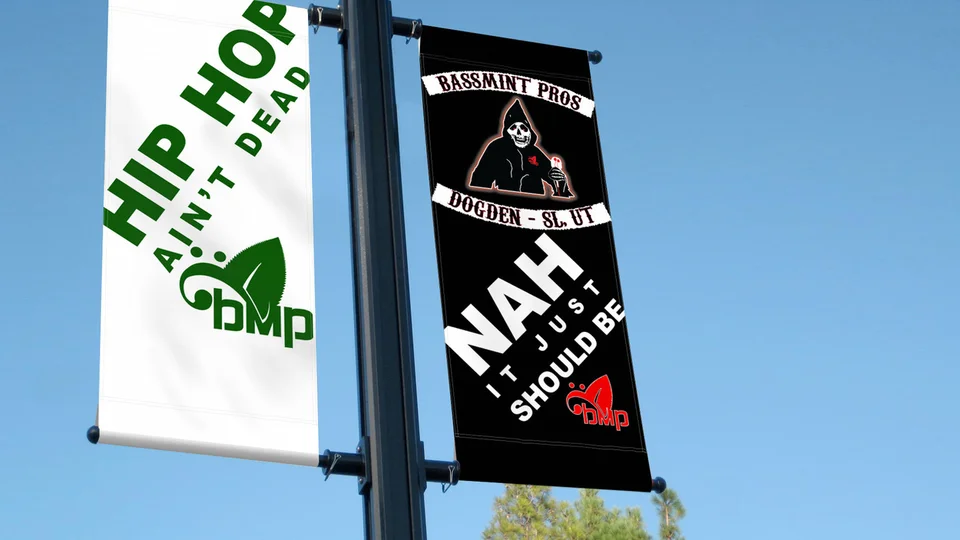
Galactic's portfolio provides existing examples for discussing hierarchy, consistency, and visual direction. Look at how the work handles information across applications and ask which principles relate to your own material. The portfolio images here are broader studio work rather than claimed St. Louis commissions.
Better graphics can support a credible presentation, but their effect also depends on the message, distribution, and business offer. Define the reader's task before evaluating the design. A brochure that explains a service clearly and an announcement that makes a current action obvious have concrete purposes beyond looking attractive.
Questions about graphic design in St. Louis
Can one project include print and digital materials?
Yes. List the intended channels and outputs when defining scope. They can share a visual direction while using different layouts and content density. Each format should be reviewed in its actual reading conditions.
Should every announcement look exactly the same?
No. Consistent typography, color, and structure can connect the materials while allowing emphasis to change. A reusable system should support different messages without making every piece feel interchangeable.
Can we use our current logo?
Yes, if suitable files and usage rights are available. A graphic design project can build on an existing identity. If the logo has practical limitations, identify them early and decide whether resolving them belongs in the scope.
Who handles printing?
Confirm printing, supplier coordination, proof approval, and delivery responsibilities in the proposal. Design and physical production involve different costs and decisions. Supplier specifications should be available before final print files are prepared.
What makes a template useful for our staff?
It should fit the software they use and the changes they expect to make. Test realistic content, provide clear file names, and explain which elements should remain consistent. Staff also need a process for verifying new information.
Connect the next part of your project
St. Louis web & design services · St. Louis web development · St. Louis logo design · Explore the Galactic portfolio · Browse all service areas
Plan your next step
Give your business a useful next step
Bring an upcoming message and the places it needs to appear. We can plan St. Louis graphic design that keeps the offer clear across the formats your business uses.
Discuss your St. Louis project