
Give a business announcement something useful to say
A new service, updated location, or expanded offer needs more than an attractive announcement. People need to understand what is available, whether it applies to them, and what to do next. Graphic design gives those details a readable order across the materials customers actually receive.
DuPont’s city museum describes a history that includes its company-town period and the development of Northwest Landing. That local context suggests a useful planning question for a business introducing change: what should feel familiar, and what needs a fresh explanation? It does not dictate a historical look or a particular audience.
Galactic Digital Studios helps DuPont businesses organize that explanation into practical printed and digital pieces. The starting point is the information a customer needs, followed by the format, visual hierarchy, and production requirements that make it usable.
Choose the pieces that support a real conversation
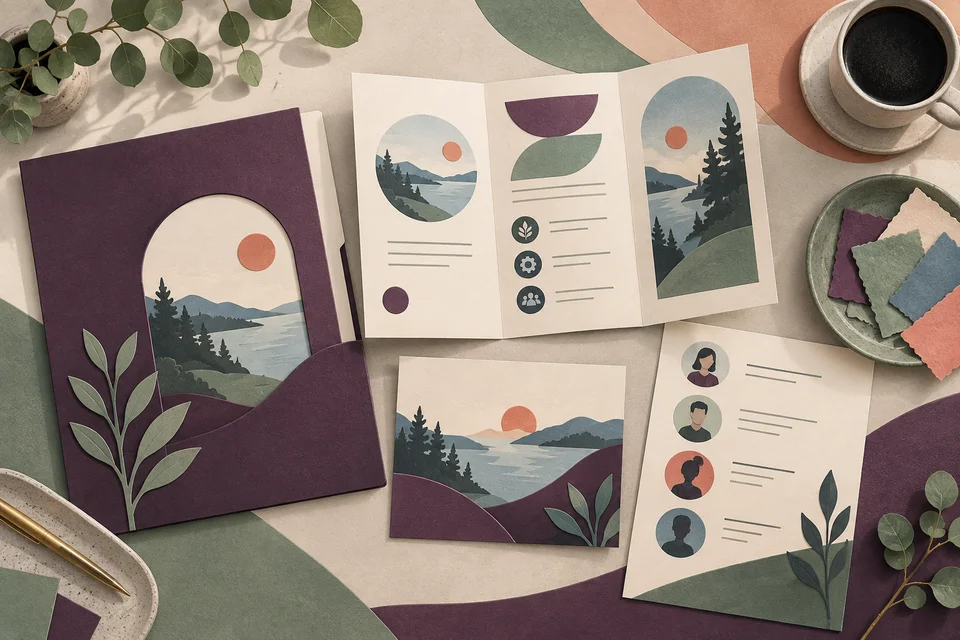
Begin with the moments where staff or customers need a reference. A short announcement may introduce the offer, while a service sheet answers questions that arise afterward. An internal reference can help the team describe the same details consistently. Each piece should earn its place in the project.
For example, a hypothetical business adding a service might need a website graphic, a concise handout, and a staff summary. It may not need a full brochure at launch. This is a planning example, not a claim about a DuPont client or a prescribed package.
Map the route between pieces. If a card directs someone online for current details, use a clear destination and enough context to explain the benefit of visiting. A QR code can supplement a readable address rather than becoming the only way forward.

Separate durable information from details that will change
A launch packet is easier to maintain when permanent descriptions and temporary announcements have distinct roles. The core service sheet can explain the offer, while a replaceable insert carries a limited promotion or schedule. Decide which information belongs on each before designing the layout.
Write the essential message in plain language. Identify the offer, audience, key conditions, and next step. Visual hierarchy should help a reader locate those details without needing to study every paragraph. Decorative elements should not compete with the information people came to find.
Review related pieces together for factual consistency. An old service name on a handout and a new one on the website can create unnecessary questions. Establish the approved wording and record which files need an update whenever that wording changes.
Design for the way each item will be used
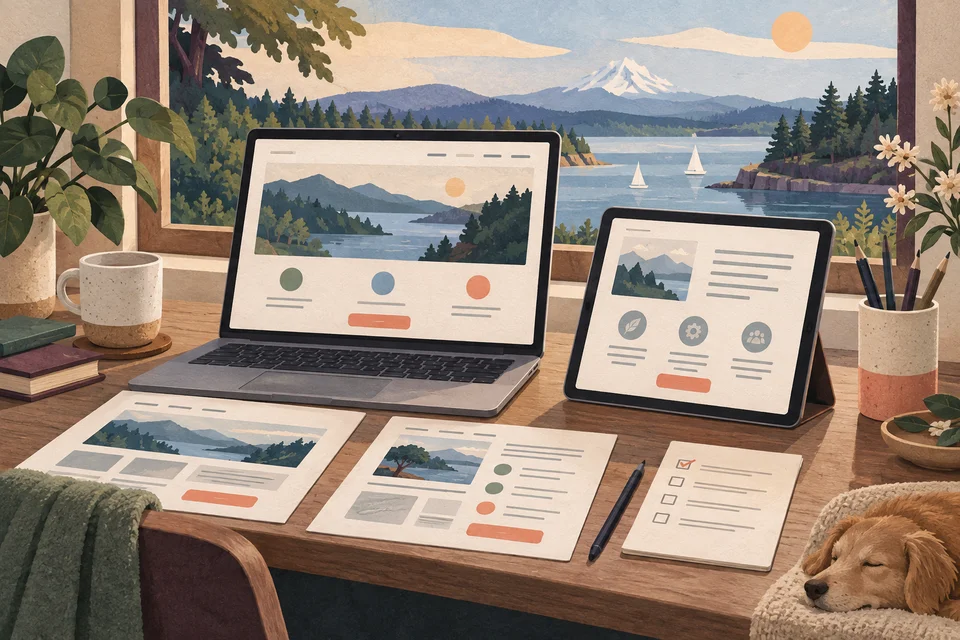
A printed sheet read at a counter needs different decisions from a narrow image viewed on a phone. Choose type sizes, spacing, and contrast for the actual format. Reducing a complete print layout into a social graphic usually makes the most important content too small.
Digital versions may need editable text, accessible document structure, and meaningful reading order. Agree on those requirements early because they affect production and review. A flattened image of a document does not automatically provide the same usable information as a properly prepared file.
For print, confirm the supplier’s dimensions, bleed, folding, stock, and finishing requirements. A folded piece needs enough room around creases, and a form needs enough room for the intended response. These practical constraints are part of the design brief.

Plan a coordinated set of materials for your DuPont business announcement.
Approve the message before multiplying the formats
Start with an inventory of existing assets, current copy, and required outputs. Identify an approver who can resolve factual questions and consolidate feedback. If several people review the work, gather their comments into one set of decisions rather than sending contradictory revisions.
Develop a representative piece first to establish the information order and visual direction. Review it at its intended size. Once that approach is approved, extend the system to related materials and check whether each format still communicates its own primary message.
Proof final text, links, codes, dates, and supplier requirements before release. Screen approval is not a substitute for every print production check. Where color or finishing is critical, discuss the appropriate proof with the printer and allow time for that step.

Make the next update manageable for your team
Handoff should explain which files are ready to publish, which are editable, and which belong to a particular supplier. Clear filenames and a short inventory reduce the chance of circulating an outdated version after launch. Keep approved originals separate from working drafts.
If staff will edit templates, choose tools they can access and define safe editing areas. A template should accommodate realistic text changes without depending on specialist adjustments every time. Training and editable source files should be addressed in the scope.
Estimate the project around the number of distinct layouts, content preparation, adaptations, revision rounds, and production support. Ten resized exports from one design are a different task from ten independently structured documents. A useful scope makes that distinction visible.
Review clarity as carefully as visual consistency
Ask someone unfamiliar with the announcement to explain what changed and what action they would take. Their response can expose missing context or an unclear next step. This kind of review informs design decisions; it is not proof of future marketing performance.
The conceptual images here illustrate possible design work, and the portfolio examples show broader studio work. Neither establishes a DuPont client relationship. Evaluate relevant examples by how well they organize information and function in their intended formats.
Graphic Design questions for DuPont businesses
Can you design only the materials needed for a launch?
Yes. Define the first set around the customer journey and available content. Additional pieces can be planned separately. A smaller coordinated set is often easier to approve and maintain when its purpose is clear.
Can existing branding be used?
Existing logos, colors, and guidelines can guide the project after the available files and usage rights are reviewed. Graphic design does not automatically require a new identity. Missing or inconsistent brand assets may need separate attention.
Do print and digital versions need separate layouts?
Sometimes. Dimensions, reading distance, and interaction differ between channels. The content and visual system can remain coordinated while individual layouts change to suit a printed handout, downloadable document, or phone-sized graphic.
Will our team receive editable templates?
Specify templates, software, fonts, access, and any guidance needed in the project scope. Some outputs are intended for direct publishing, while others support ongoing editing. Clarify those roles before production starts.
What should we prepare for an estimate?
Bring the intended pieces, audiences, approved or draft content, existing brand files, known supplier specifications, and any required release date. Identify who will approve the work and whether copywriting or production coordination is needed.
Explore related services and nearby areas
DuPont web and design services · DuPont web development · DuPont logo design · Lakewood services · Tacoma services · Galactic portfolio
Plan your next step
Turn the announcement into useful customer information
Share what your business is introducing and where people will encounter it. We can define a practical set of materials, organize the message, and plan the files your team needs to publish and maintain.
Discuss your DuPont project