
Create an identity customers can recognize in everyday use
Logo design for a Shelton, Washington business starts with a question: what should people recognize when they encounter your name again? Galactic Digital Studios helps develop an identity that works across the places your business appears, from a website header to a printed introduction. The goal is a coherent identifier with enough flexibility for real use, supported by a clear understanding of the audience and offer.
The Mason County Historical Society documents Shelton’s connection to timber and the historic buildings of its downtown. That heritage can inform a creative conversation, but it does not mean every Shelton company needs a tree, saw blade, or vintage badge. A useful identity should distinguish your business. Local character can appear through tone, materials, or visual rhythm without becoming a literal collection of regional symbols.
Understand what your current identity already contributes
If customers know your existing name and mark, begin by identifying what remains valuable. The issue may be inconsistent files, difficult small-size use, or unclear typography rather than a need to start over. A careful refresh can preserve familiar elements while improving how the identity works. A new business has a different task: establishing a recognizable starting point without inherited expectations.
Bring examples of where the logo appears today and where it needs to work next. A hypothetical Shelton service company might need a clearer wordmark for proposals and its website before considering workwear or vehicle graphics. That is a planning example, not a claim about a Galactic client. The important point is to define actual applications so the project solves practical problems rather than judging a mark only in isolation.

Give the design a focused brief
Describe the business in plain language: what it offers, who it serves, and why a customer might choose it. Then identify a few qualities the identity should convey and explain what those qualities mean in your work. Reliable might mean consistent communication; precise might mean careful documentation. These explanations provide more direction than an unranked list of adjectives such as modern, bold, friendly, and premium.
Galactic uses the brief to connect audience expectations with visual choices. Typography, proportion, shape, and color can influence the impression a logo creates, but they cannot prove service quality on their own. The identity should support the reputation your business is building through its actual work. It should also leave room for the offer to develop without requiring a redesign whenever one service changes.
Make local influence a choice with a purpose
An identity can belong comfortably in Shelton without trying to represent the entire community. If a timber-inspired reference connects to your own business story, discuss how to use it in a distinctive way. If it has no relationship to the offer, a clear name treatment or abstract form may provide a stronger starting point. The brief should explain the connection instead of relying on a familiar symbol to do all the work.
Also consider customers who encounter the business outside the immediate area. A name and mark should remain understandable without a local explanation. Avoid visual choices that imply an affiliation, certification, or public role the business does not hold. Original design and thoughtful review matter, while formal trademark clearance remains a separate professional process; a design presentation does not establish legal availability.
Discuss a logo that fits your Shelton business and its everyday uses.
Evaluate concepts in the places they need to work
The process can move from discovery into a limited set of considered directions, then feedback and refinement. Review a direction against the brief rather than selecting whichever version looks most elaborate. Ask whether the name reads clearly, whether the visual character suits the business, and whether the mark remains recognizable without a long explanation of its meaning.
Real applications make that review more useful. Test a small website placement, a simple document header, a dark background, and a one-color use when relevant. These checks can expose thin details or awkward proportions that are easy to miss in a large presentation. Consolidate feedback around the agreed goals, then refine the selected direction before preparing the required variations and delivery files.

Define the identity package before comparing costs
Logo project cost depends on the starting point, the exploration required, the number of applications, and the delivery scope. A focused logo refresh differs from a broader identity system with typography guidance, color specifications, and supporting materials. Be explicit about the immediate uses and which additional pieces need design. A logo file alone does not automatically include a website, stationery set, or production-ready signage.
Timing depends on the clarity of the brief and the availability of decision-makers. Agree on who will approve the direction, how feedback will be gathered, and what happens when the scope changes. Before delivery, confirm file formats, ownership terms, font or asset licensing, and whether editable source files and usage guidance are included. Those details help your business use the identity consistently after the design conversation is finished.

Protect recognition as the identity spreads
An identity is most useful when people apply it consistently. Keep approved files in an organized location and make it clear which version suits a given background or format. Share the agreed guidance with vendors rather than asking each supplier to recreate the mark. If a production method needs a different treatment, resolve that deliberately so the business does not accumulate conflicting unofficial versions.
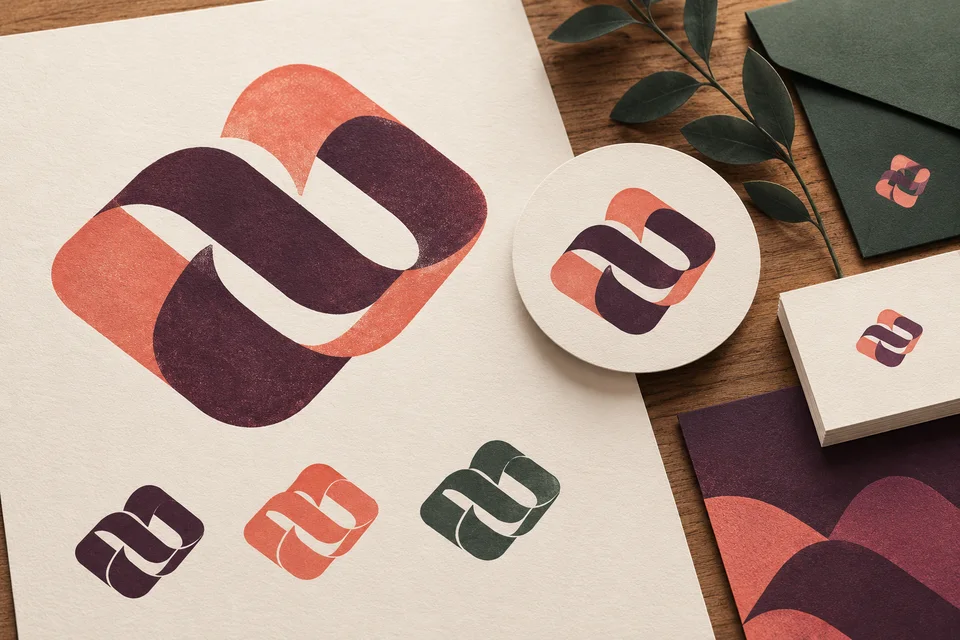
Review the existing Galactic portfolio for evidence of clear forms, readable names, and coherent applications. The portfolio examples on this page are not Shelton commissions, and the generated illustration is a conceptual study rather than a client identity. A logo can support recognition and credibility, but customer trust still depends on experience. Evaluate success by consistent, useful application rather than expecting a new symbol to generate demand by itself.
Questions about designing a Shelton business logo
Can we keep part of our existing logo?
Yes, a refresh can retain useful elements when they still fit the business and are available for authorized use. Share original files and explain what customers already recognize. The review can establish which parts should remain and which limitations need attention before deciding how much to change.
Should the logo include a local landmark or tree?
Only if that reference supports the business story and produces a distinctive, usable identity. A local symbol is not required to serve Shelton customers. Consider whether the mark will still make sense across different services, at small sizes, and to people who do not know the area.
Which files will we need?
Discuss scalable artwork for production, appropriate raster files for everyday digital use, and versions for light, dark, or one-color settings. The exact package should be documented in the scope. Ask vendors about their specifications before assuming that one file will suit every application.
Can the logo become part of a larger brand system?
Yes, the identity can inform website design, business documents, and other materials when those applications are included or separately scoped. Agree on the typography, color, spacing, and supporting visual rules needed to connect those pieces. Consistency comes from deliberate application as well as the mark itself.
What should we bring to the first discussion?
Bring the business name, a plain-language description of the offer, existing assets, and examples of required uses. Explain any concerns about the current identity and who will approve the work. References can help describe preferences, but the direction should emerge from your own business goals.
Plan your next step
Build recognition into the places your business appears
Tell us what your business stands for and where its identity needs to work. We can shape a Shelton logo project around a focused brief, useful applications, and a consistent foundation for future materials.
Discuss your Shelton project