
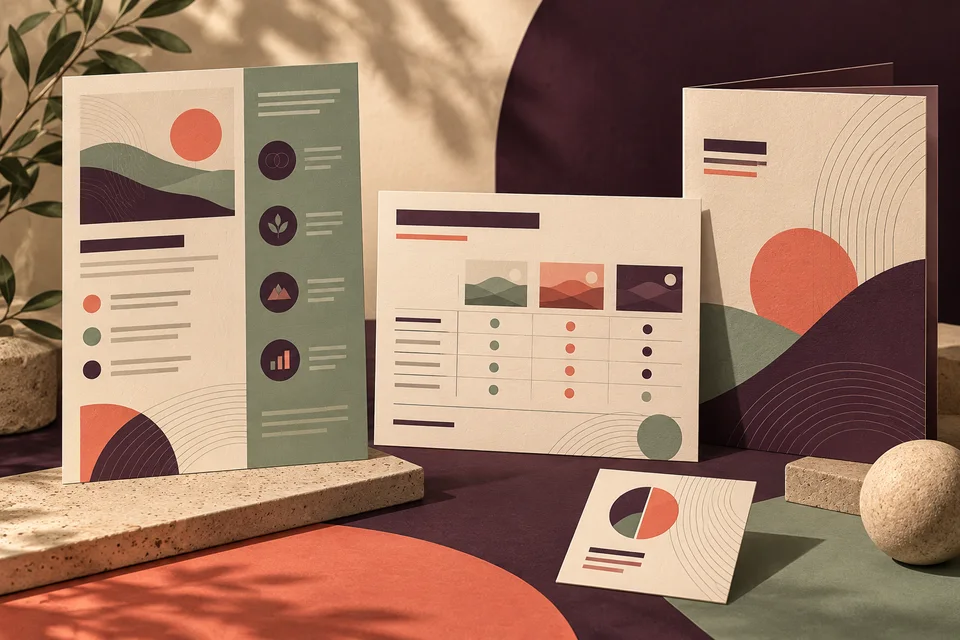
Make service choices easier to explain and compare
Graphic design for Graham, Washington businesses can help customers understand an offer before they commit to the next step. Galactic Digital Studios develops purposeful visual communication for service sheets, proposals, brochures, and related materials. We focus on the decisions a reader needs to make: which option fits, what is included, and what information is needed to move the conversation forward.
Pierce County describes agricultural and forested character within the wider Graham planning area. That context does not mean every business should use a rural visual style. A business document should reflect its own audience and work. Whether you need an approachable introduction or a carefully organized comparison, local relevance comes from describing the service accurately and making the material useful to the people receiving it.
Separate the introduction from the detailed comparison
A first introduction and a service comparison have different jobs. The introduction should establish what the business does and why the reader might want to learn more. A comparison needs enough detail to distinguish options without hiding important qualifications. Putting both into a small piece can overwhelm someone who is just getting acquainted with the offer.
Imagine a Graham business that provides a basic service and a more extensive version. A hypothetical comparison sheet could align the included tasks under consistent headings, then explain how suitability is assessed. A separate handout could introduce the company in a few clear sections. These are examples of possible design decisions, not evidence of local commissions. The useful question is what each reader already knows when the material reaches them.

Use visual hierarchy to make distinctions visible
When two options differ, show the difference where readers are already comparing them. Consistent headings, spacing, and grouping make a document easier to scan. Supporting details should be legible and close to the claim they explain. Important conditions should not become tiny text simply because the page was designed before the content was understood.
Galactic can help turn an outline or rough document into a clearer reading sequence. We consider what belongs in the main message, what needs a supporting explanation, and what may be better handled in a separate piece. Color and imagery can help organize the information, but they should not be the only way a reader tells options apart. Descriptive labels remain essential, especially in copies or reduced-size versions.

Write for the person who receives the second copy
Business materials often travel beyond the initial conversation. A customer may forward a PDF, take a proposal home, or share an introduction with another decision-maker. The recipient should be able to identify the offer, understand the key assumptions, and find the intended next step without relying on comments that were made only in person.
For a Graham business serving different project locations, that can mean explaining coverage and assessment requirements within the document. A generic regional image cannot communicate those details. Keep the service name consistent with the website and identify where someone can find current information. A document that remains understandable after it changes hands can support a more productive follow-up conversation rather than forcing staff to explain the same basics again.

Plan clearer service documents and business graphics for your Graham customers.
Build the layout around approved information
An initial review can establish who will read the piece, how it will be distributed, and which decisions it needs to support. Bring existing documents, usable brand files, and the facts that must appear. From there, we can develop a representative layout and check whether the hierarchy reflects the intended message before extending the approach to additional formats.
Feedback should cover both content and presentation. A missing qualification requires a different change from a concern about visual tone. Consolidate comments and identify who approves factual statements. Before final delivery, proofread the complete piece in its intended format. For printed materials, confirm supplier specifications and production responsibilities; for digital documents, review screen readability and any links. Those checks help catch problems that are easy to miss in an enlarged design preview.

Decide what should be reusable
Not every document needs to be redesigned for each use. A consistent structure may support recurring proposals, service summaries, or follow-up materials when the content follows a predictable pattern. Identify which fields will change and which elements should stay fixed. A template is useful only if the team can edit it with the available tools and keep the important hierarchy intact.
Some changes deserve design attention even when an editable file exists. Adding a new service, replacing a short explanation with several paragraphs, or changing the intended audience can affect the entire piece. Discuss the difference between routine updates and new design work before delivery. Confirm whether source files, editable templates, or only finished exports are included, along with any applicable font and image licenses.
Scope the project around formats and production needs
Cost depends on content organization, the number of original layouts, illustration or image needs, and the formats required. A comparison document may involve more editorial work than a simple promotional card. List the actual uses rather than requesting an undefined package of graphics. If several pieces share a direction, identify that relationship so the project can develop a coherent family of materials.
Schedules also depend on approvals and outside production. Raise printing or distribution deadlines early, and distinguish the design delivery date from the date finished materials must be available. Portfolio examples can help assess Galactic’s treatment of hierarchy and consistency; the examples here are existing work, not Graham projects. Good design can support credibility and informed inquiries, while distribution, the offer itself, and staff follow-through still affect results.
Questions about Graham graphic-design projects
Can you organize a document we already wrote?
Content organization can be included in the scope. Share the full information and explain which parts customers struggle with. The design process can improve grouping and reading order, while the business remains responsible for verifying service descriptions and approving factual claims before delivery.
Is a comparison table always the best format?
No. A table helps when the options share attributes that readers can compare meaningfully. If the services solve different problems, separate explanations may be clearer. Choose the structure around the decision instead of forcing unrelated information into matching columns for visual symmetry.
Can our team keep changing prices or service details?
Discuss those updates before the file format is chosen. An editable template may suit recurring changes, provided the team has the software and guidance to use it. Another approach is to keep changing details on a maintained web page and use print for a durable introduction.
Will the same file work for printing and email?
The visual direction can carry across both uses, but the final exports should suit their destinations. Print suppliers may require specific dimensions and file settings, while digital readers need manageable files and readable layouts. Include each intended use in the initial brief.
How will we know whether the new materials help?
Ask staff and customers which parts are clearer and where questions remain. Watch whether people understand the options and prepare useful information for the next conversation. Design does not guarantee a sales result, but those observations can identify whether the material is doing its intended job.
Plan your next step
Give customers a clearer view of their options
Bring the documents that carry your service explanation and the details customers tend to miss. We can discuss graphic design that makes your Graham business materials easier to read, compare, share, and maintain.
Discuss your Graham project