
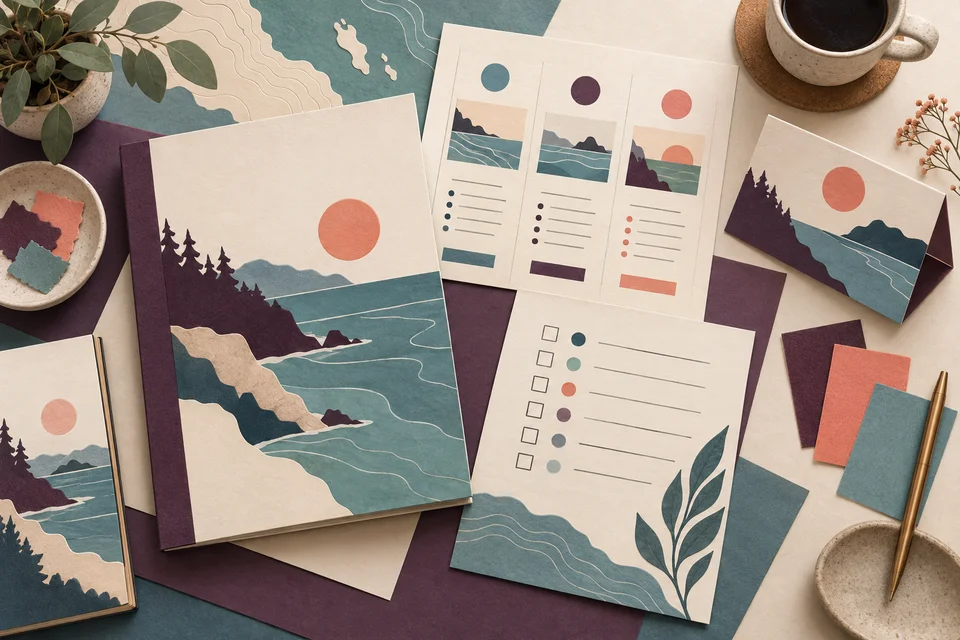
Make the proposal as clear as the conversation
A useful business document helps customers review the same information after a conversation ends. Galactic provides graphic design for Picnic Point, Washington businesses that need clear proposals, service comparisons, presentations, and project guides. We organize the message around the reader’s decision, with a visual direction that makes the material recognizable and practical to use.
Snohomish County identifies Picnic Point Park as a Puget Sound destination, while the Census Bureau separately identifies the Picnic Point community. Those local references can influence visual character without defining the business. A document should describe your actual services and coverage, and its imagery should not imply a waterfront premises, park relationship, or location that belongs to someone else.
Choose the decision the document needs to support
A proposal helps someone evaluate a defined scope. A comparison sheet makes options easier to understand. A preparation guide explains what happens before work begins. A presentation supports a discussion in sequence. Identifying that purpose early prevents one piece from becoming a mixture of promotion, instructions, and detailed terms with no clear order.
For example, a hypothetical service business may need customers to choose between two levels of support. The design should make the meaningful differences visible and keep shared information from overwhelming the comparison. A separate guide can then explain preparation once the choice is made. We consider the whole sequence before recommending page counts or formats, so each item earns its place.

Keep the important distinctions easy to find
Good hierarchy helps readers understand what belongs together. A price explanation should connect to the scope it describes. An optional item should look different from a standard inclusion. A deadline should sit near the action it governs. These relationships need to be resolved in the content and layout rather than left for a reader to infer from scattered notes.
For businesses serving Picnic Point, service coverage and visiting arrangements may be among those important qualifications. Use plain wording that can be understood by someone outside the immediate area. A location reference can establish context, but it should not carry the burden of explaining how the service works. Keep the practical information close to the offer it qualifies.
Design for review, sharing, and later reference
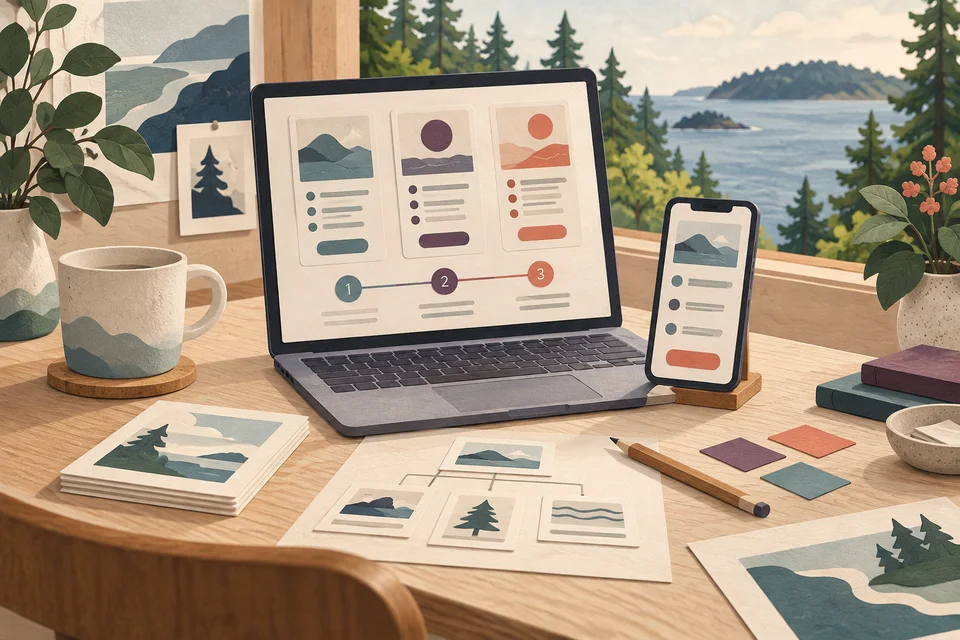
Galactic considers how the document will be encountered. A proposal may be read on a phone, printed for a discussion, or shared with another decision maker. Clear headings and a sensible sequence help it remain understandable in those situations. A presentation, by contrast, may need less text on each page because it is supported by a speaker. The format should reflect the intended use.
Typography, spacing, color, and imagery can create consistency without forcing every document into the same layout. A preparation checklist needs a different rhythm from an introduction brochure. We can establish a shared visual system while allowing each piece to support its specific task. Important information should remain readable at the size people will actually use, not only in a large design preview.

Give your Picnic Point proposals and guides a clearer structure for customer decisions.
Review a representative layout before producing variants
A project can begin with existing branding, draft content, intended formats, and examples of materials your team already uses. We then establish the information structure and visual direction. Reviewing one representative application helps resolve the central decisions before adapting the approach across a larger set. Confirm whether writing, editing, image sourcing, or illustration is included in the scope.
Feedback should explain the reader’s difficulty. A comparison may give two unlike items equal weight, a heading may suggest the wrong meaning, or a preparation step may be easy to overlook. Consolidate factual and visual comments before refinement. Final review should cover approved wording, permissions, layout, and the output requirements of the intended printer or digital destination.

Make recurring documents easier to update correctly
If your staff will create new versions, identify the software they use and the changes they make most often. A template should support those tasks while showing which identity elements remain fixed. Test likely variations, such as longer service names or additional scope items, rather than assuming every future document will match the first draft exactly.
Agree on editable files, export formats, and any required font or image licenses. Print production may require dimensions, bleed, and supplier specifications, while a screen document needs readable text and a manageable file size. Clarify who orders, approves proofs, and distributes the result. A file handoff is most useful when the team understands how to select, update, and retire versions.
Assess the value of a coherent document system
Budget depends on content readiness, original concept work, document complexity, and the number of distinct applications. A set of simple resizes differs from several documents with different information and audiences. Timing also depends on approvals and production deadlines. Explain the actual workflow so the estimate reflects the materials that will be used, rather than an arbitrary volume of deliverables.
Review Galactic portfolio examples for readable hierarchy and an appropriate relationship between message and medium. These are not Picnic Point commissions. Ask how the same reasoning would apply to your documents. Design can support clarity and credibility, but approval rates and sales also depend on the offer and customer situation. Staff feedback and recurring questions can help identify the next useful improvement.
Graphic Design questions for Picnic Point businesses
Can you create a reusable proposal template?
Yes, when the structure, software, and expected variations are defined. Identify the information that changes between projects and the parts that remain standard. Confirm editable delivery and any necessary licenses in the scope.
How do we make service options easier to compare?
Start with the differences customers need to understand, then organize shared and option-specific information clearly. Avoid adding vague benefits to every column. Important limitations should remain visible beside the option they affect.
Can the same document work on screen and in print?
A shared direction can support both, but each output should suit its destination. Consider page proportions, text size, file weight, and print specifications. Plan the versions before final production instead of assuming one export covers every use.
Do we need to finish all the wording first?
You need a clear offer and a person responsible for approving facts. Draft content can be reviewed during planning, but writing and editing responsibilities should be agreed. Layout cannot resolve a service scope the business has not yet decided.
Can local scenery be used in our materials?
Use scenery when its rights and subject are known and it supports the message. Keep conceptual artwork distinct from actual photography. A local view should not suggest that the business occupies the property shown or represents a public facility.
Explore related services and nearby areas
Picnic Point web and design services · Picnic Point web development · Picnic Point logo design · Everett services · Brier services · Galactic portfolio
Plan your next step
Make the information easier to review together
Bring the proposal, comparison, or project guide that needs attention. We can plan a graphic design scope around its purpose, the formats your customers use, and the updates your team needs to make.
Discuss your Picnic Point project