

Design for the places Hooper customers encounter the message
Hooper’s official history describes agricultural traditions and the long-running Tomato Days celebration. Its general plan documents a city balancing rural character with change. A business may need event pieces, vehicle graphics, appointment handouts, mailers, recruiting materials, or regional sales documents; each has different reading conditions.
A roadside piece needs immediate recognition. A service sheet can explain a process and coverage area. A phone graphic needs large type and a clear destination. Event dates, offers, addresses, and restrictions must be verified by the business and kept separate from decorative landscape imagery.
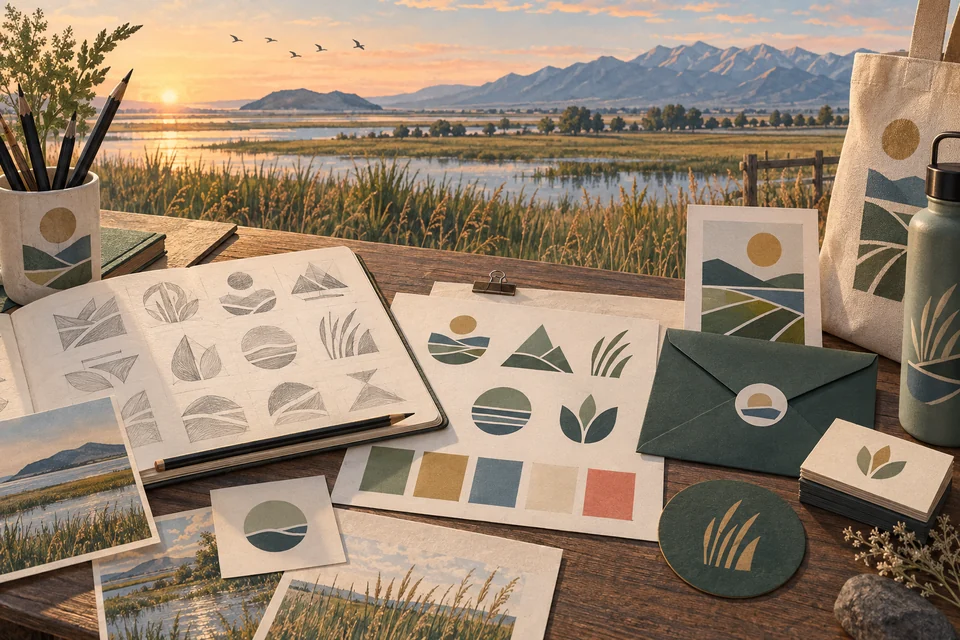
The design-table artwork on these pages is an original concept using generic fields, irrigation water, wetlands, and mountains. It is not a documentary Hooper view, an official event graphic, a real business identity, or completed client work.
Pick the format from the job it must do
Begin by identifying one communication problem. Do people miss an offer? Do staff explain the same process repeatedly? Do event materials fail to say where and when? A concise brief needs to specify the audience, channel, required facts, and desired response before choosing dimensions.
A poster can catch attention at a distance; a handout can carry more explanation; a digital tile needs readable type at phone size. A series may need a shared visual system so each new piece feels familiar. The appropriate format follows the use case, not a design trend.
A website can hold detailed, changing information behind a short piece. A logo system helps materials look related. Links and contact details on the finished graphic should lead to a page or person prepared to continue the same message.

Build a hierarchy that survives the channel
Establish what a person should notice first, understand second, and do third. An event card may lead with the event name and date. A service sheet may lead with the problem solved and the scope. Secondary qualifications and fine details needs to remain readable without overwhelming the primary message.
Inspect every layout at final size. A print layout viewed at monitor scale can hide tiny type; a desktop mockup can conceal a crowded phone tile. Contrast, line length, margins, and image choice affect whether the message can be used in its actual setting.
Preserve essential words as text, not embedded in a scenic image alone. Original visual concepts can suggest Hooper’s rural and wetland setting without claiming to depict a specific business, park scene, or project. A local motif is useful only when it helps the message and stays within the brand.

Make a reusable family of materials
Galactic starts with the content and use list, then explores layout, type, color, and imagery. We review a direction against the audience and practical placement. The result needs to be recognizable across a small group of materials without making every piece identical.
A repeatable system can define headings, callouts, image treatment, and approved logo placement. This lets staff make future pieces more consistently. It also limits the need to reinvent basic decisions each time a date or offer changes.
Coordinate print and digital versions when both matter. A square post, a story, a printed sheet, and a sign have different viewing distances and crops. Agree on each required output before final art so important words remain visible in every version.
Ask for the files needed to use the design
A useful proposal needs to list the finished pieces, dimensions, versions, revisions, and production specifications. Print work may require bleed, color settings, and a vendor-ready PDF. Digital work may require several crops and accessible text supplied separately.
Assign who writes and verifies copy, who supplies photography and usage rights, and who arranges printing or distribution. If a piece uses a QR code, verify its destination and its readability at actual size. The printed action needs to remain understandable even if a code cannot be scanned.
Timing depends on content readiness, number of formats, approval roles, and vendor deadlines. A small set of complete pieces can be more useful than a large batch of loosely related drafts. Keep editable files and update expectations clear at handoff.
Review a realistic proof before release
Discovery collects the audience, goal, brand assets, required details, and places the piece will appear. A content hierarchy then guides concept work. Review needs to ask whether a person can understand the message and act without staff explaining missing information.
Refinement addresses readability, accuracy, and production fit. Print proofs should be checked at intended scale, while screen assets should be checked on a phone. Confirm dates, URLs, phone numbers, legal text supplied by the owner, and image permissions before export.
At delivery, organize approved files by purpose so a team member can find the correct version. Record any rules for future updates. If the piece contains a time-sensitive offer, the owner should know when it needs to be removed or revised.

Compare examples by communication quality
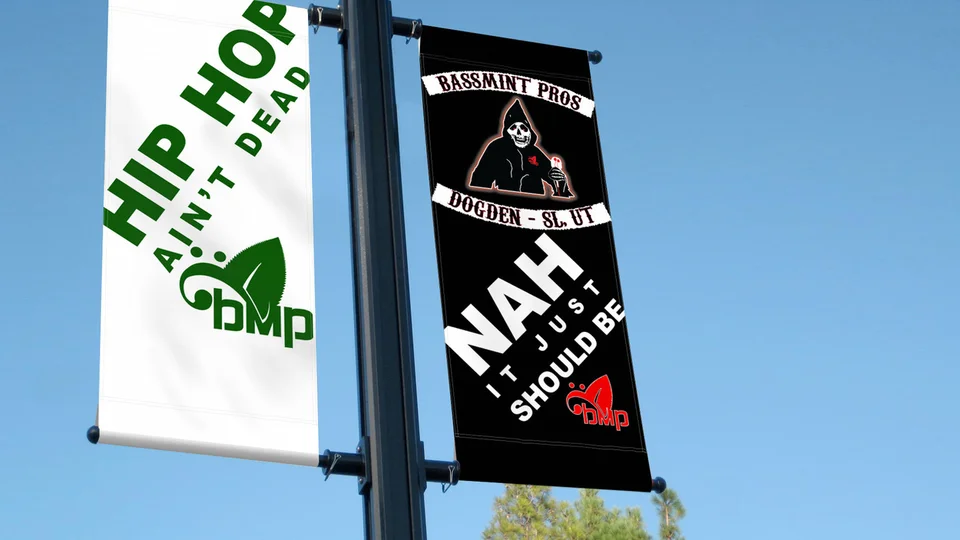
Galactic’s graphic portfolio includes work for businesses elsewhere. Those examples show completed design, not Hooper client work or verified campaign performance. Look at how each piece guides attention and whether its key information remains readable.
Bring a real draft, a recurring customer question, or a current piece that staff struggle to use. That evidence can reveal whether the issue lies in the message, the layout, inconsistent identity, or the destination the piece points to.
Effective graphics support a wider customer experience. A polished flyer cannot repair an outdated web page or unclear offer. When the materials, site, and staff response agree, customers have a more coherent path from first glance to next step.
Questions about graphic design in Hooper
Can one design work for print and social media?
A shared concept can, but each format needs its own layout and final-size review.
Do you need finished copy before design starts?
Core facts and an approved message are needed. Copy development can be part of a defined scope.
Can existing brand assets be used?
Yes. Provide usable files and any rules for colors, type, and image rights.
Is printing included?
Confirm production and vendor responsibilities in the proposal; design files and physical printing are separate deliverables.
What makes a design effective?
A clear audience, accurate information, readable hierarchy, and a next step that works in the chosen channel.
Ready for a useful next step?
Give the next message a clearer shape.
Share the material, audience, and place it will appear. We can plan a useful Hooper graphic design deliverable.
Discuss your Hooper project