

A clear introduction for customers near and far
Galactic Digital Studios helps American Fork, Utah businesses explain what they offer through web development, graphic design, and logo design. A useful introduction gives a prospective customer more than a good first impression. It answers whether your business handles their kind of request, what they should know before getting in touch, and how to take the next step. We organize the words and visuals around those decisions.
American Fork’s official community overview describes a regional retail role and notes that Interstate 15 runs through the city. That context makes it worth considering both familiar local customers and people encountering your business for the first time. It does not establish who buys from you. Your actual customers, services, and working arrangements provide the starting point for the project.
Start with the moment your customer gets stuck
Before deciding what to redesign, look at a recent customer conversation. Did the person misunderstand a service, miss an important requirement, or struggle to find the appropriate inquiry option? Those moments reveal where better communication could help. A hypothetical showroom might need clearer visiting information; an independent consultant might need a stronger explanation of who their work suits. These are examples for planning, not claimed American Fork clients.
Gather the questions your team repeatedly answers and compare them with what your website and materials currently say. If customers cannot distinguish two offers, new colors alone will not solve the issue. If the information is accurate but looks unrelated across channels, a coordinated visual system may be the priority. Defining the obstacle gives the project a useful purpose and gives you a practical way to assess proposed work.
Choose a connected scope without buying everything at once
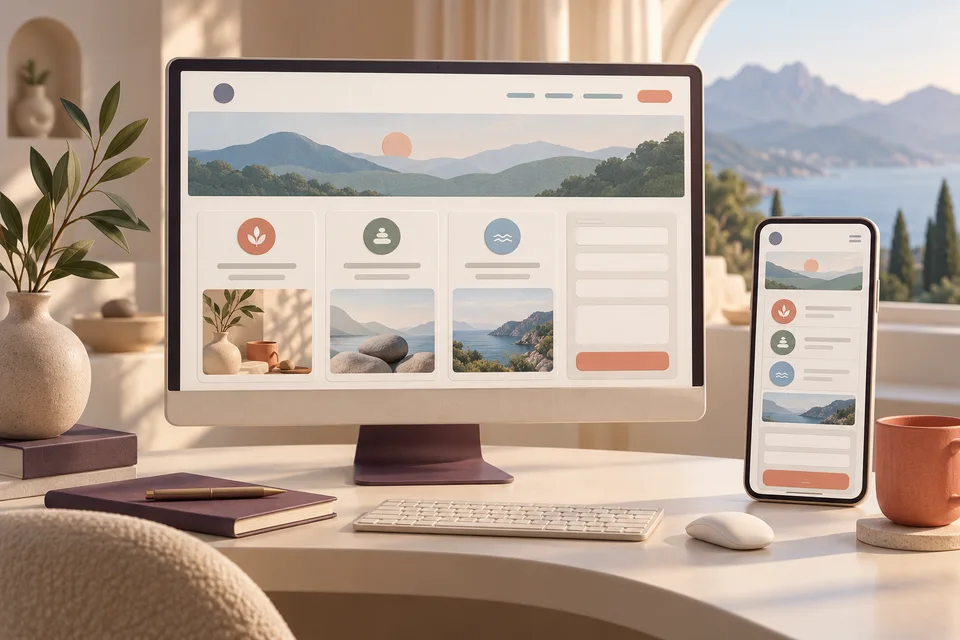
American Fork web development can organize service information, create readable mobile pages, and help visitors send an informed inquiry. Think of the website as the place where someone can move from a brief introduction to the details needed for a decision.
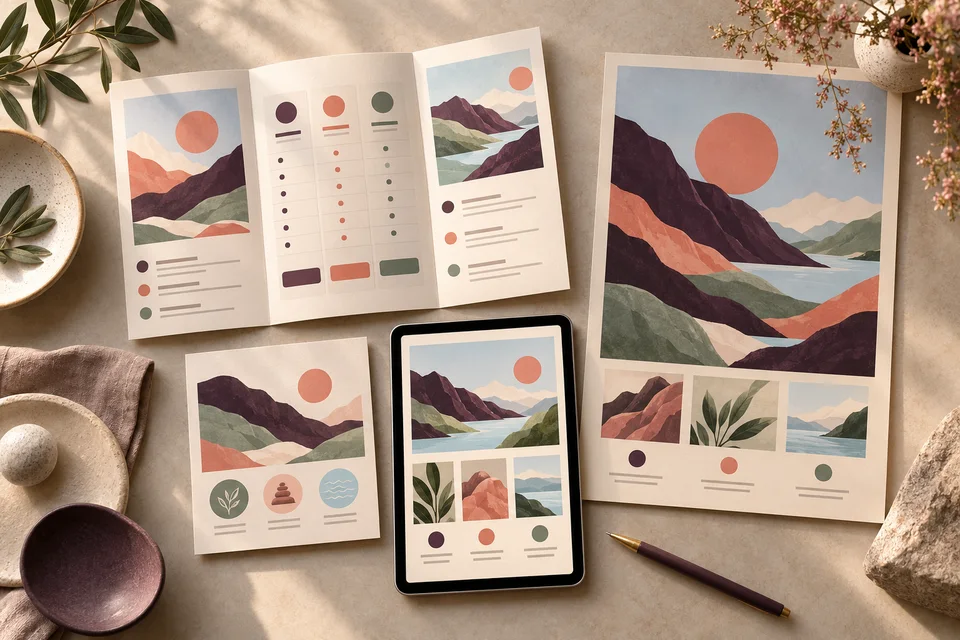
Graphic design for American Fork businesses carries those explanations into brochures, presentations, service sheets, and digital promotions. A document should remain useful after it leaves your hands, with enough context for a colleague or family member to understand it.
American Fork logo design establishes a recognizable visual identity for those touchpoints. A focused refresh may be appropriate when an existing mark has value but performs poorly at small sizes. A new direction may be more useful when the business itself has changed.
The services can be planned together or delivered in a sensible sequence. Identify decisions that affect later work, such as naming, service categories, or approved identity files, before commissioning materials that depend on them.
Build the message around a real decision
Our strategic approach begins with the audience, the offer, and the action you want someone to take. We review the information already available, identify missing explanations, and choose a structure that helps readers compare relevant options. Design then gives those priorities a visible order through headings, spacing, imagery, and consistent emphasis.
For a business with both visiting and mobile customers, the two paths should be clear. Describe which activities happen at a customer-facing location and which begin with a service request. Avoid making a broad coverage statement sound like an invitation to visit an office. Accurate details support confidence before a conversation starts.
Clear presentation can support credibility and visibility, but commercial results also depend on demand, pricing, reputation, and follow-through. We discuss useful measures for the agreed project instead of attaching a sales promise to a new design.

Let’s plan the next useful improvement to your American Fork business presence.
Compare proposals by responsibilities and deliverables
A useful proposal identifies what is being created and who is responsible for the inputs. Ask whether content organization, copy refinement, image preparation, additional layouts, and file handoff are included. Confirm which materials you will supply and which decisions need approval before production begins.
Budget depends on the amount of original work, the complexity of the website or materials, and the number of applications to prepare. Scheduling also depends on content readiness and timely decisions. Bring any event, printing, or launch constraints into the first discussion so the scope can account for them.
Agree on ownership and access arrangements for the deliverables, domain, hosting, and any third-party assets. Editable files and font licenses should be discussed explicitly. A good handoff leaves you knowing which updates your team can make and where further help may be needed.
Move from a focused brief to usable work
Discovery establishes the business problem, intended audience, and priority deliverables. Bring current materials, representative customer questions, and examples of what feels unclear. Together, those inputs support a brief that is specific enough to guide choices without prescribing every visual detail too early.
Direction comes next: page structure, message priorities, and a visual approach suitable for the business. Review with realistic content. A design filled with placeholder words can conceal a service explanation that does not fit or an important qualification that has nowhere to go.
During creation and refinement, one person should consolidate feedback from the people who need to approve the work. Explain why something causes concern so revisions address the underlying issue. Delivery includes the checks and agreed files relevant to the scope, followed by clear responsibility for future changes.
Review examples for decisions you can understand
Our portfolio gives you concrete work to discuss alongside the studio background. Look at how a website introduces a service, how a printed piece groups information, and whether an identity stays recognizable in different applications. The examples shown here are selected studio work, not evidence of American Fork commissions.
The city’s historic walking tour documents downtown buildings and public history. That local character can inform a conversation about tone, but a business does not need a historic-looking brand to belong here. Its own offer and audience should guide the presentation. If your actual coverage extends to nearby markets, our Lehi and Lindon service pages provide related starting points.

American Fork web and design questions
Can we keep parts of our existing brand?
Yes. Begin by identifying what customers already recognize and what still works. Existing colors, imagery, or identity elements can inform the brief; any changes should solve an identified problem rather than create unnecessary replacement work.
Which service should come first?
Start with the decision that affects the others. Unsettled naming or identity may need attention before new materials. If the identity works, improving service content and inquiry paths may deliver the most useful first release.
Do you need to work from an American Fork office?
This page describes the businesses we serve, not a local branch. Discuss the project’s collaboration needs, review arrangements, and any location-dependent work during discovery so the scope reflects how the work will happen.
Can the project happen in phases?
A phased project can work when each stage has a clear purpose. Decide what must be complete for the initial release and retain a list of later improvements, with dependencies and responsibilities recorded.
What should we bring to the first conversation?
Bring your current website and materials, the questions customers ask, the services you want to emphasize, and any deadlines. You do not need a finished creative brief; those details are enough to begin defining one.
A practical next step
Plan an American Fork business presence that is easier to understand, recognize, and act on.
Bring your current materials, the questions you want to resolve, and the priorities for your next project. We can use that context to define a focused scope and a sensible sequence for the work.
Discuss your American Fork project