
Give your business a recognizable signature across its work
Logo design for Graham, Washington businesses should account for how the identity will actually appear. Galactic Digital Studios helps develop marks and name treatments that remain coherent across websites, documents, and other agreed applications. The aim is to make your business easier to recognize while giving staff and suppliers a practical set of files to use consistently.
Graham’s community plan recognizes rural and forested character alongside more developed areas. That offers possible creative context without prescribing a particular look. Your business may benefit from an understated wordmark, a distinctive symbol, or a combination of both. The useful starting point is the company’s own story and audience, rather than assuming a mountain or evergreen automatically makes an identity appropriate for every local business.
Start with the smallest and simplest uses
A logo is often reviewed at a generous size, but customers may encounter it as a small website header, a document identifier, or a compact profile image. List those uses before choosing a direction. A form that relies on delicate detail or a long line of small text may be attractive in a presentation and difficult to recognize in daily use.
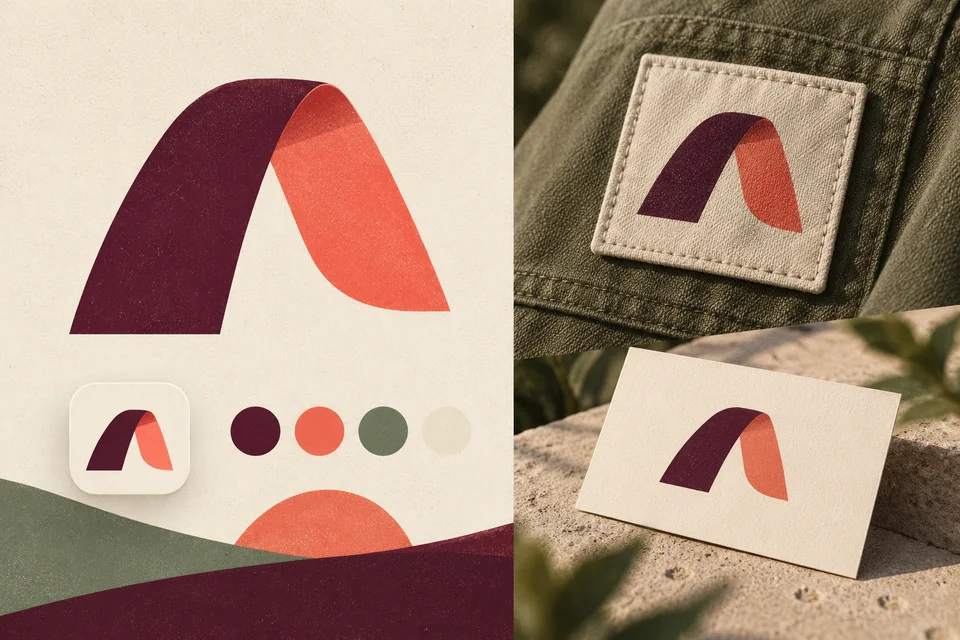
For a hypothetical Graham service business, the priority might be a readable name on estimates and a simple mark for workwear. Those applications have different constraints, so the project should establish which ones matter first. This is a planning example, not a local client claim. Showing a proposed identity in realistic placements helps the team evaluate its usefulness instead of choosing only by personal preference at large scale.

Decide what the identity needs to say about the business
A focused brief describes the offer, intended customers, and qualities the business can support through its work. If you want the identity to feel careful or approachable, explain what those words mean in the customer experience. That gives creative choices a concrete basis. Broad adjectives without priorities can send a project toward several incompatible directions.
Galactic uses that understanding to explore typography, proportion, shape, and color. A logo can suggest a tone and establish a memorable identifier, but it cannot communicate every detail of the service. Keep the mark focused and let supporting copy explain the offer. The identity should have enough room to remain useful as services develop, particularly when a narrow illustration would tie it to only one part of the work.

Choose whether recognition needs preservation or a fresh start
An established business may already have recognizable elements worth keeping. Ask what customers identify today: the name treatment, a shape, a color relationship, or a familiar arrangement. A refresh can address weak reproduction or inconsistent application without discarding everything. A new company can establish its direction more freely, while still needing a clear brief and approved business name.
Local imagery is one choice within that discussion. Use it when it connects to the business and remains distinctive, not simply because several competitors use similar symbols. Avoid designs that suggest a public agency, certification, or other affiliation the company does not hold. Visual exploration and originality are part of the design task; any formal trademark clearance should be handled as a separate professional process rather than inferred from the presentation.
Plan a Graham business identity that works in the places customers actually see it.
Compare concepts against the same practical questions
A project may move from discovery into considered design directions, then refinement of the selected approach. During concept review, use the brief as a shared reference. Can people read the name? Does the tone fit the business? Does the symbol remain recognizable when simplified? Does the proposed system work in the placements that were identified as priorities?
Invite feedback from the people responsible for applying and approving the identity, then consolidate it into a clear response. A production concern about thin lines is different from a preference for a warmer color. Addressing the reason behind a comment helps refine the direction without combining every suggestion into a crowded mark. Confirm the selected design before expanding it into additional variations and supporting materials.

Plan variations around actual conditions
A useful identity may need horizontal and compact arrangements, versions for light and dark backgrounds, and a one-color option. The exact set should follow the business’s uses and be agreed in scope. Avoid creating many nearly identical versions without explaining when to choose each one. An organized set of purposeful files is easier to use than a folder full of unclear alternatives.
Production conditions matter as well. A fabric application, a small printed card, and a digital avatar can reveal different limitations. Share supplier requirements when those uses are part of the project. A mockup helps visualize an application, but it does not replace a vendor’s production check. Discuss whether adapting the artwork for a particular process is included or will require additional work.

Make delivery the beginning of consistent use
Ask what the final package includes before comparing proposals. Scalable artwork, everyday digital exports, color information, and basic usage guidance may all be relevant, while source files and broader brand guidelines need explicit agreement. Confirm ownership terms and any licensing requirements so the business understands what it can use and share after delivery.
Keep the approved files in a location the team can access, and send those files to suppliers rather than asking them to recreate the mark from an old document. If the identity is replacing an existing one, identify the most important places to update first. A planned transition helps reduce conflicting versions across estimates, website pages, and other materials customers may see close together.
Evaluate the investment beyond the first presentation
The scope affects cost: a focused adjustment to an existing mark differs from new identity exploration and a broader application system. Timing depends on an agreed name, a clear brief, timely feedback, and any required production coordination. Discuss the immediate priorities and which additional materials can follow later. Website layouts, stationery, and promotional graphics are separate deliverables unless included in the proposal.
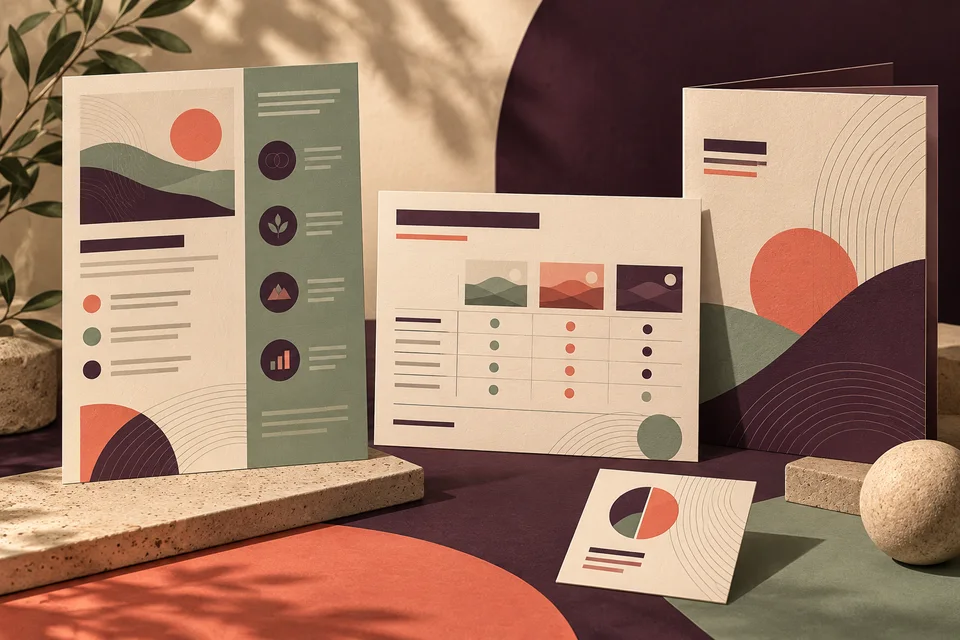
Existing Galactic portfolio work can demonstrate how an identity carries across applications. The examples here are not Graham commissions, and the generated image is an invented concept study. Look for consistent forms and readable name treatments rather than a matching industry alone. An identity can support recognition and credibility, but reputation grows through actual customer experience; a new logo cannot guarantee demand or commercial performance.
Logo-design questions for Graham businesses
Do we need a symbol as well as our business name?
Not necessarily. A distinctive, readable wordmark may suit the business well. A symbol can be useful for compact placements when it adds recognition. Discuss the intended uses and the name itself before assuming that a separate icon is essential to the identity.
Can we keep familiar colors?
Existing colors can remain when they support the direction and work across the intended applications. Review contrast, reproduction, and the relationship between the colors rather than preserving every old value automatically. Any updates should serve a clear purpose and be documented for consistent use.
What if our current logo only exists as a small image?
Share the best available file and explain its history and authorized use. The project may need reconstruction or a redesign, depending on its quality and the intended changes. Establish that work in the scope rather than assuming a small image can support every production format.
Should we order signage or workwear before the design is finished?
Wait until the artwork is approved and the relevant supplier requirements have been checked. Early conversations with vendors can inform the design, but production based on an unfinished concept can create avoidable rework. Coordinate the approval and production sequence around your actual deadline.
Can the identity support future business materials?
Yes, when the core design is flexible and its use is clearly documented. Related graphic design and website work can apply the same direction through separately agreed deliverables. Identify likely future applications during discovery so they inform the identity without expanding the initial scope unexpectedly.
Plan your next step
Build a consistent signature for your business
Show us where your identity needs to appear and what your business wants to communicate. We can define a Graham logo project that connects a focused brief with practical applications and files your team can use confidently.
Discuss your Graham project